Buckled at the Ankle: The Long Ride of the Jodhpur Boot

Every wardrobe has its show-offs and its aristocrats. The show-off announces itself; the aristocrat waits to be recognised. Among ankle boots, the Chelsea is the show-off — famous, easy, endlessly Instagrammed. The jodhpur boot is the aristocrat. It arrives with a small buckle at the ankle, no elastic gusset, no fuss, and a pedigree that runs straight back to a polo ground in western India. Most men couldn't name it if they saw it. That is precisely its appeal.
A boot named after a city
The jodhpur boot is one of the few garments in the modern wardrobe that carries a real place-name and actually earned it. Jodhpur, the "Blue City" of Rajasthan, was the seat of the Marwar kingdom and, by the late nineteenth century, a serious centre of polo. It was there, under Maharaja Sir Pratap Singh, that the loose-thigh, tight-calf riding trousers we now call jodhpurs were refined for the game. The boot followed the trouser. Riders needed something short enough to sit under the breeches but secure enough to grip the stirrup — a low boot that closed with a strap and buckle wrapped around the ankle rather than laces that could snag or come undone at a gallop.
When the British officer class carried the style home after the turn of the century, the jodhpur boot went with it, and by the 1920s and '30s it had migrated from the saddle to the paddock to the country weekend. Like so much of the English wardrobe — the trench coat, the covert, the Norfolk jacket — it was born of function on the frontier and quietly civilised into leisurewear once it reached home soil.

How to tell a jodhpur from a Chelsea
The two are cousins, both ankle-height and both slip-adjacent, which is why they get confused. The difference is in how they close.
- The jodhpur fastens with a leather strap that wraps around the ankle and secures through a buckle, often with the strap crossing the top of the foot. It hugs the ankle bone and creates a clean, uninterrupted line up the leg.
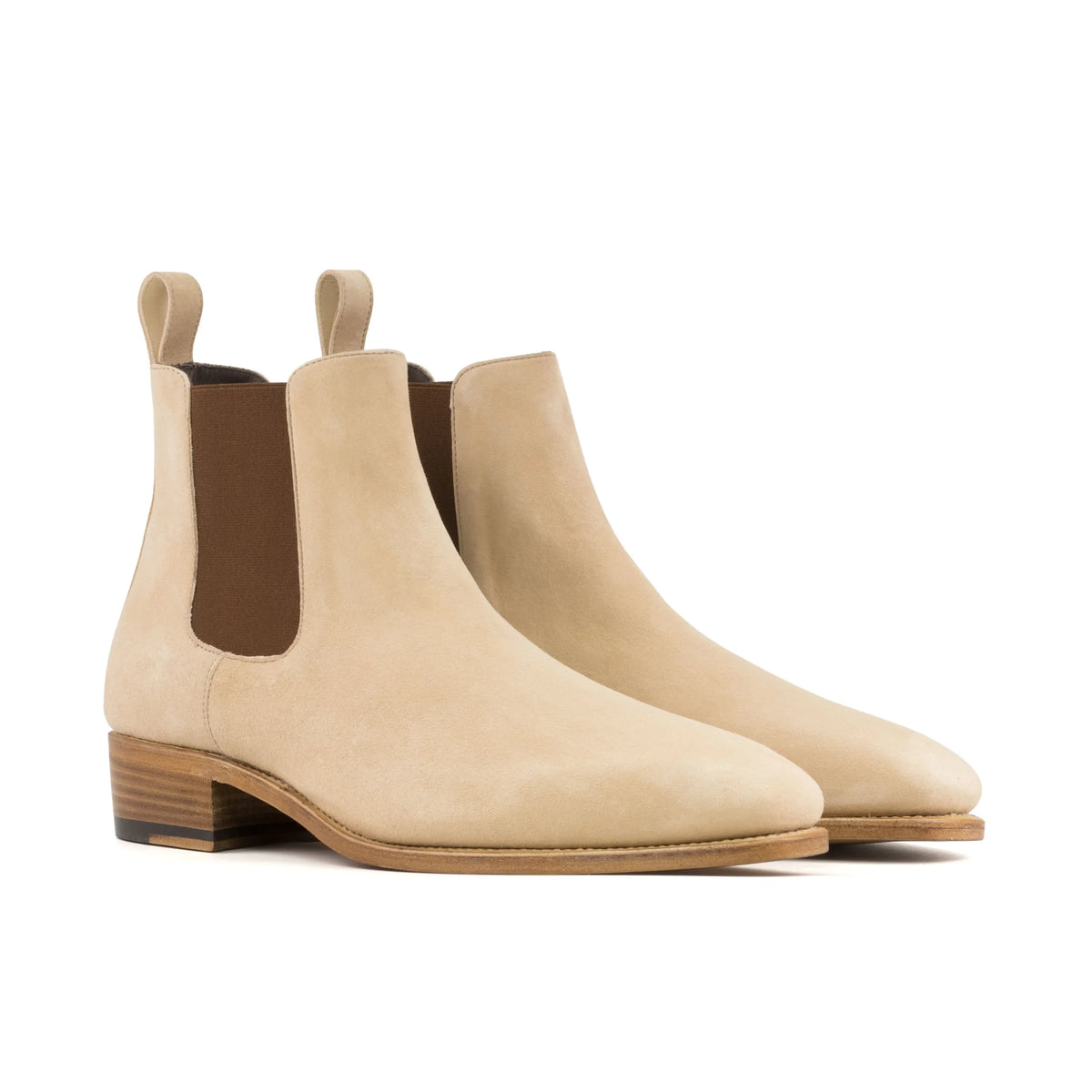
- The Chelsea has no strap at all — it relies on an elastic gusset at each side to pull on and off. Faster, sportier, more Sixties King's Road.
The practical upshot: a Chelsea is a boot you throw on; a jodhpur is a boot you fasten. That extra second of ceremony is the whole point. It reads as considered rather than convenient, which is why it tends to look more at home under a suit than under jeans — though, as we'll get to, it can do both.

From the paddock to the pictures
The jodhpur's second act came, as these things often do, through film and equestrian glamour. Mid-century Hollywood loved a riding silhouette — the swagger of a boot and breech worn off the horse as much as on. Later, the equestrian revival that ran through the collections of houses like Ralph Lauren and Gucci kept the strap-and-buckle language alive, borrowing the vocabulary of the tack room and stitching it into ready-to-wear. Even as the Chelsea boot became a mod uniform and then a menswear cliché, the jodhpur held its ground as the connoisseur's alternative — the boot for men who had already owned three pairs of Chelseas and wanted something with more architecture.
It helps that the buckle photographs beautifully. There is a reason luxury houses keep returning to the strap: it catches light, it implies craft, and it gives the eye somewhere to land on an otherwise minimal shoe.

A clean version like Que Shebley's Anastasio Jodhpur Boots shows why the shape endures: a close ankle strap, a trim last, and the kind of hand-finished Italian crust leather that deepens with wear. It is the sort of boot that quietly upgrades a grey flannel suit and looks equally correct with dark denim on a Saturday — the rare piece that spans both halves of a man's week.
The case for wearing one
The jodhpur solves a specific modern problem. Most men own dress shoes for the office and sneakers for everything else, with nothing bridging the gap. The jodhpur is that bridge. It has enough formality to sit under tailoring and enough attitude to survive an untucked shirt, and because it hits at the ankle it flatters a slimmer trouser without the bunching a taller boot causes.
A few working rules:
- With tailoring: keep the trouser break short and let the boot's clean line finish the leg. Black or dark brown calf under navy or grey is faultless.
- With denim: a mid-brown or burgundy jodhpur turns a plain pair of dark jeans into something deliberate. Let the hem sit just at the strap.
- Mind the trouser width: this is a boot that wants to be seen. A puddle of fabric over the ankle defeats the entire design.
When the boot goes exotic
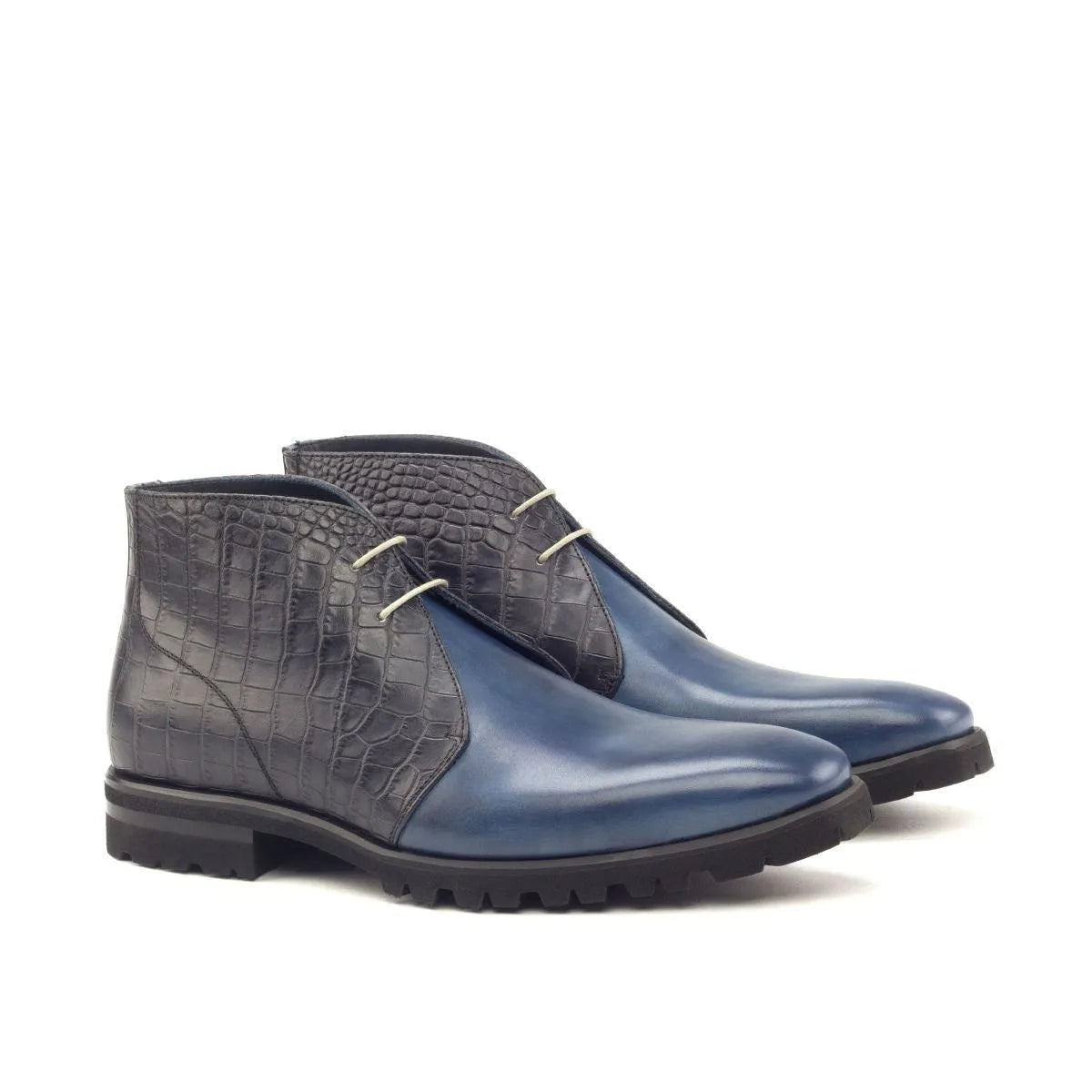
Because the jodhpur is essentially a minimalist canvas, it takes well to more expressive materials — the strap and the low vamp give texture somewhere to sing. Exotic skins are the natural extreme here. A python jodhpur, for instance, keeps the boot's disciplined shape while letting the pattern do the talking, the scales shifting under light in a way calf never will.

That is where a boot like the Miyamoto python version lives — a piece for the man who already understands the shape and wants to push it somewhere more theatrical. Worn with restraint, against plain trousers and a solid knit, it reads as confidence rather than costume. The trick with any exotic jodhpur is to let the material be the only loud thing in the outfit.
The quiet aristocrat holds
Trends in menswear tend to swing between the loud and the discreet, and we are firmly in a discreet cycle — the era of quiet luxury, of clothes that whisper their provenance. That is a good climate for the jodhpur boot. It was never designed to be noticed from across the room; it was designed to work, to last, and to reward the person standing close enough to see the buckle. More than a century after those first pairs were pulled on beside a polo pony in Rajasthan, that remains the most modern thing about it. The show-off boots come and go. The aristocrat rides on.

اترك تعليقًا
This site is protected by hCaptcha and the hCaptcha Privacy Policy and Terms of Service apply.