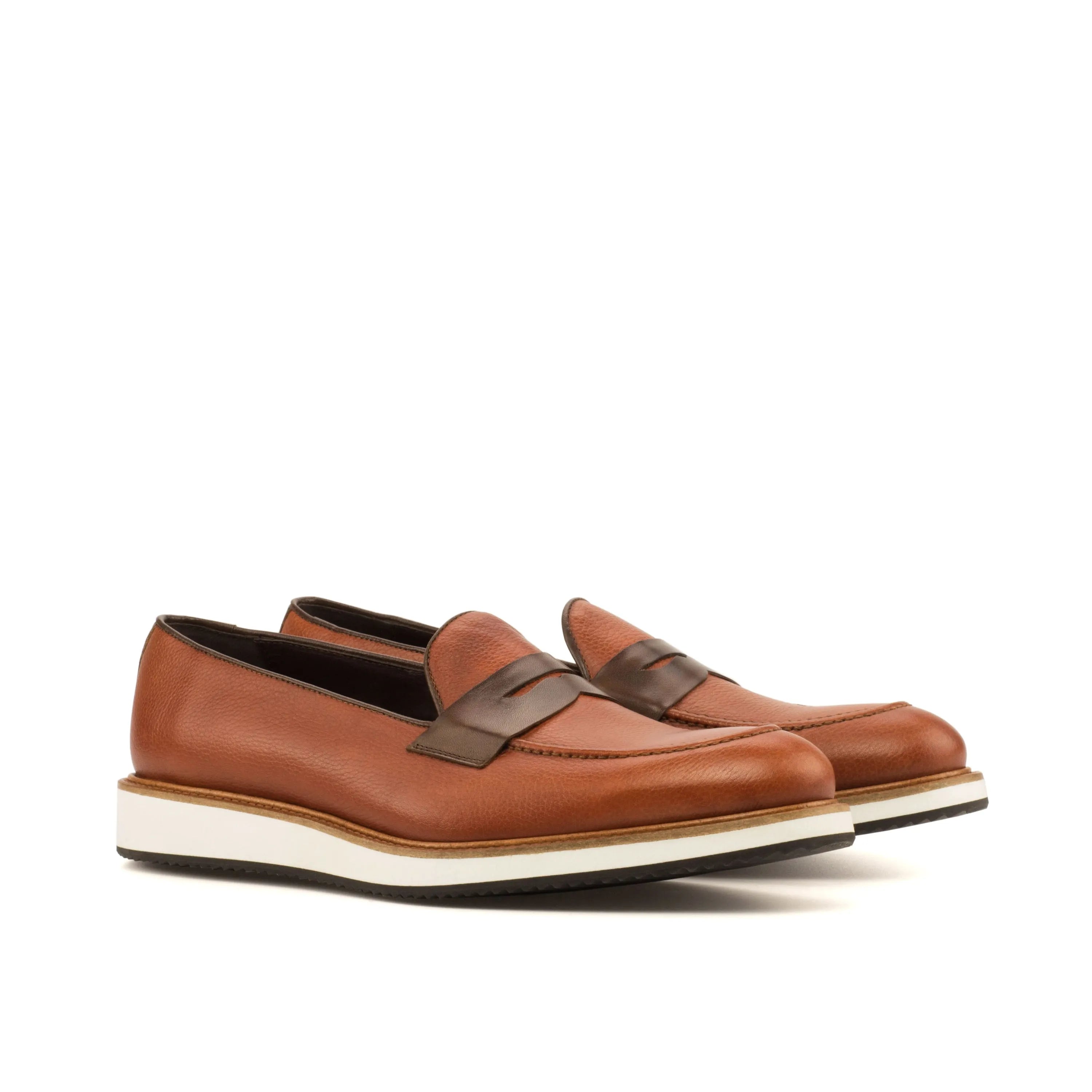
The Blank Canvas: How Crust Leather and the Art of Patina Turned Shoemaking Into Painting
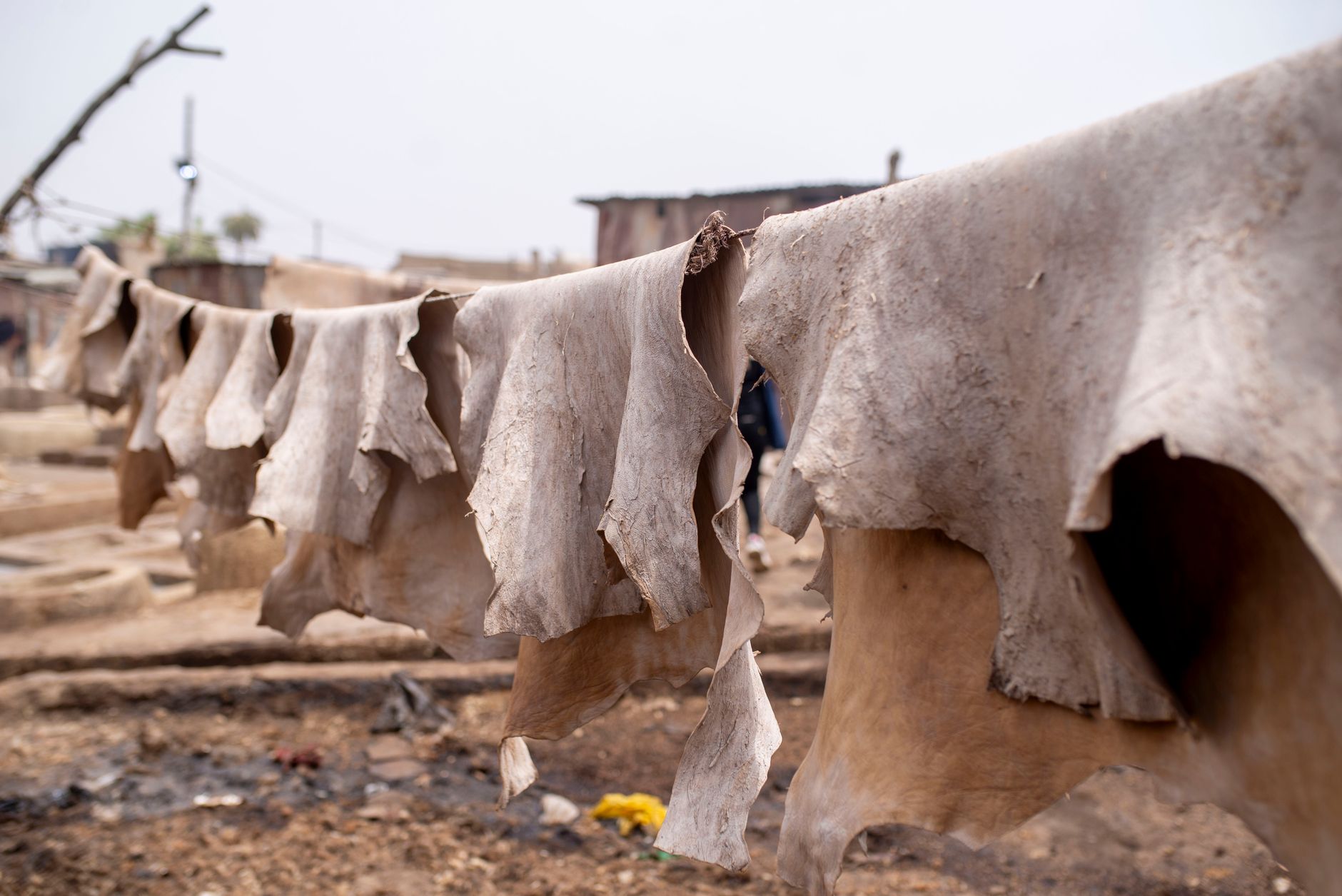
There is a moment, early in the making of a great pair of shoes, when the leather looks almost unfinished — pale, matte, faintly biscuit-coloured, like a canvas primed but not yet touched. To an untrained eye it reads as incomplete. To a colourist, it is the most exciting stage of all. That raw, undyed hide is called crust leather, and it is the reason a certain kind of shoe can be one colour on Tuesday and a deeper, smokier version of itself by Friday. The whole discipline of patina — arguably the last true painterly craft left in menswear — depends on starting with nothing.
We talk about leather as if colour were built into it. It usually is. Most factory shoes arrive at their hue in the tannery, where hides are drum-dyed straight through in industrial vats: efficient, uniform, permanent. Crust leather refuses that shortcut. It is tanned and dried but left deliberately naked, its surface open and thirsty, waiting for a human hand to decide what it becomes. That decision is patina, and once you understand it, you can never look at a flat, evenly-coloured shoe the same way again.
A Frenchwoman, the Moon, and the Birth of a Cult
The modern story of patina runs through Paris, and specifically through Olga Berluti. In the 1980s and '90s she took the family shoemaking house her great-uncle had founded and turned colour into theatre. She sanded and burnished and layered pigment until the leather seemed lit from within, and she wrapped it all in gorgeous mythology — the famous tale of polishing shoes under moonlight, the private "Swann Club" dinners where clients brought their Berlutis to be admired and "fed" with special care. Whether or not moonlight does anything to calfskin is beside the point. What Berluti understood was that a shoe could carry gradation, shadow and highlight like an oil painting, and that men would fall hard for the result.
She was not alone. Pierre Corthay, Anthony Delos, Dimitri Gomez — the great Parisian bespoke names built reputations partly on the strength of their finishing. In their hands a plain calf oxford could go from cognac at the toe to a bruised aubergine at the heel, the transitions so smooth they looked like weather rather than work. The technique spread south to the Italian ateliers and eventually became a signature of a whole tier of made-to-order houses, where a customer chooses not just a last and a leather but a colour story that will exist on exactly one pair of shoes: his.
What Actually Happens on the Bench
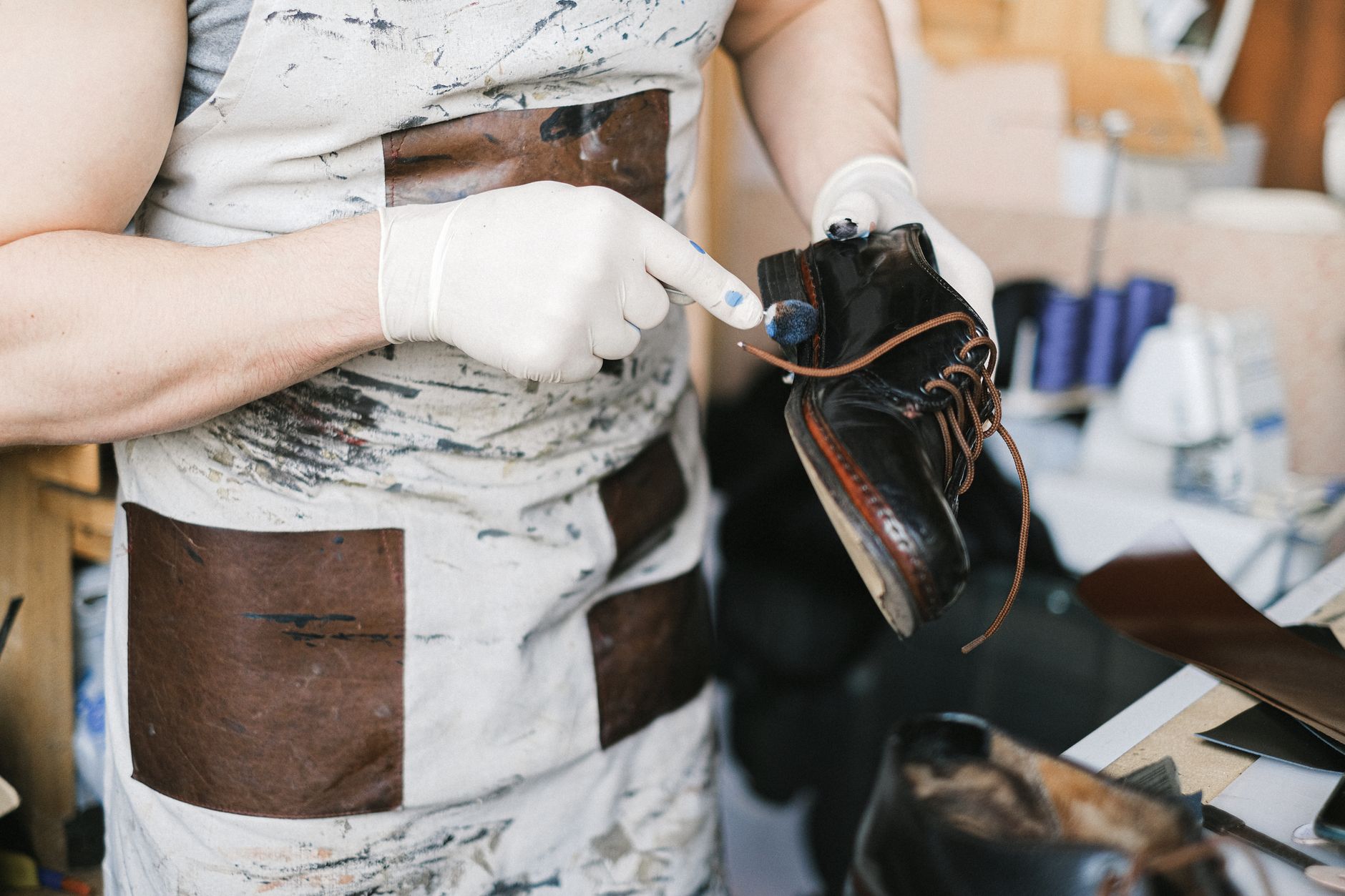
Strip away the romance and patina is a controlled accident, repeated by someone who has learned to control it very precisely. The artisan begins with that pale crust hide and applies dye in thin, translucent coats — often diluted, often with a sponge, a brush, or bare fingers wrapped in cloth. Each layer is worked in, dried, and judged before the next goes on. Darker pigments are pushed into the welt, the edges, the natural creases where a shoe would age and shadow on its own. Highlights are lifted at the toe cap and vamp, the places light naturally strikes.
The result is depth — the sense that the colour has a history even on day one. A well-executed patina isn't "brown." It is four or five browns arguing politely with a little green, a little grey, a flash of amber where the light hits. Because it's done by hand on absorbent leather, it can never be perfectly duplicated. Two pairs cut from the same hide, coloured by the same person on the same afternoon, will differ. Most owners consider that the entire point.

The wholecut is the purest test of the form, and Que Shebley's award-winning Egyptian Patina example shows why colourists love it: with no seams or broguing to hide behind, every gradation across that single sweep of leather is exposed. There is nowhere for a lazy hand to hide, which is exactly what makes a great one so satisfying to look at.
Where Patina Earns Its Keep
The mistake people make is assuming patina belongs only on show-off shoes. In fact it does its quietest, best work on the classics — the styles you actually wear. A double monk, for instance, has that broad expanse of vamp and those two straps, all of which respond beautifully to a graduated colour that deepens toward the buckles.

Then there is the longwing blucher — all that acreage of leather, all those brogue perforations catching and scattering light. On a hand-finished crust hide it can take on an almost oil-slick complexity, the sort of blue-black or green-brown depth that looks entirely different across a room than it does in your hand.

A few rules of thumb for anyone thinking about their first pair:
- Start with a mid-tone, not a museum piece. A graduated brown, burgundy or forest green earns its keep across a whole wardrobe. Save the electric blues and multi-colour showpieces for when you already own the sensible ones.
- Respect the light. Patina is designed to change with the room. What looks nearly black in an office reads chocolate outdoors. That shape-shifting is a feature.
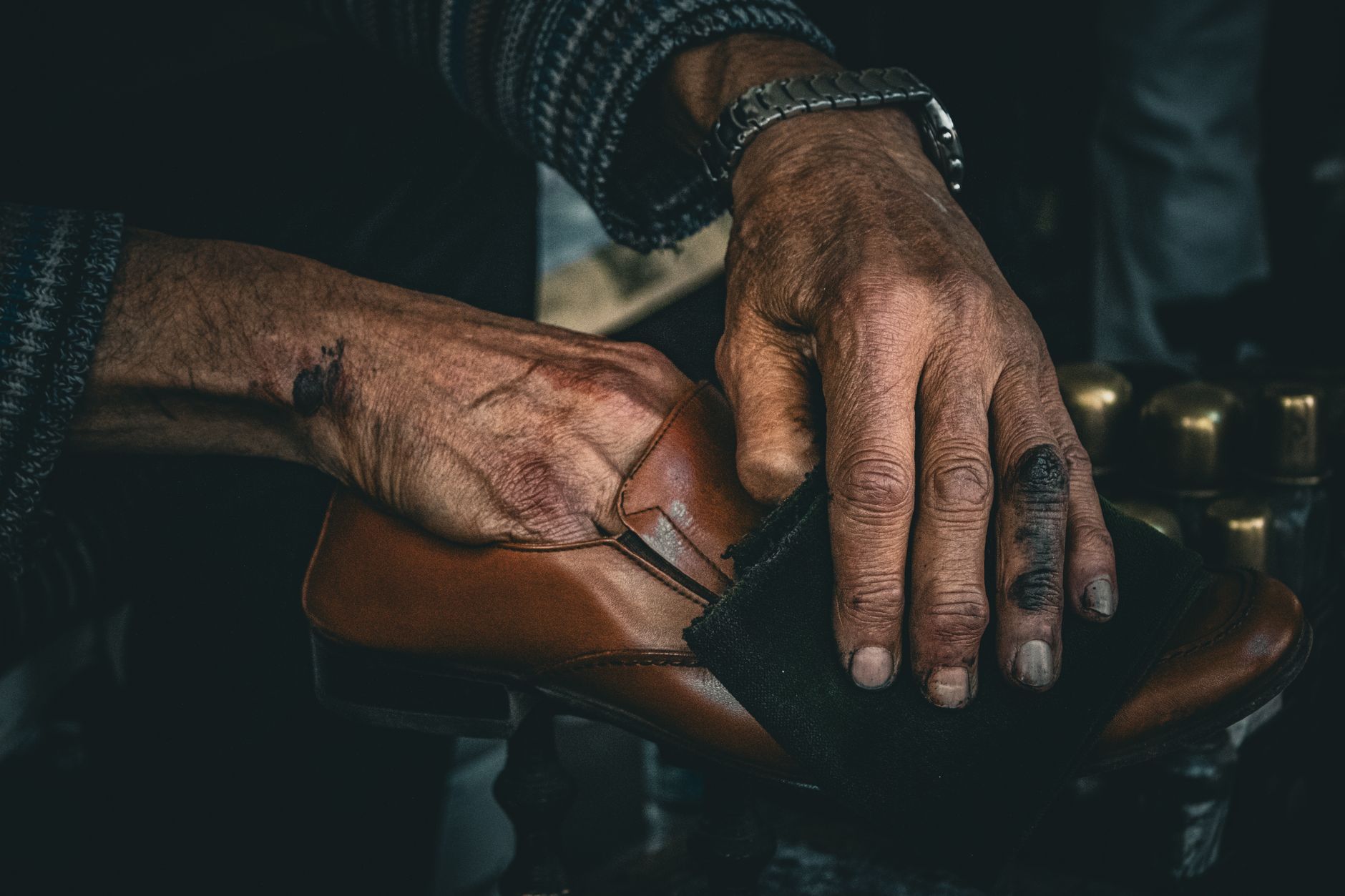
- Feed it, don't drown it. A hand-finished crust shoe wants a matching or neutral cream and gentle brushing, not a heavy pigmented polish that flattens the very gradation you paid for.
The Case Against Perfection
We live in a moment obsessed with the flawless and the reproducible — the sneaker that looks identical to ten thousand others, the finish so consistent it might have been printed. Patina is a deliberate argument against all of that. It celebrates the smudge, the deepening at the crease, the fact that a person stood at a bench and made a hundred small judgments about where the shadow should fall. It is craft that shows its hand on purpose.
That is also why patina shoes age so well. Because they were never trying to be uniform, they don't look tired when they develop their own natural wear — the two simply merge, the shoemaker's intent and the wearer's life folding into the same leather. A drum-dyed shoe fades. A patina shoe matures. Ten years in, the good ones look less like footwear and more like something you'd be reluctant to lend a friend.
Which brings us back to that pale, unfinished hide. The reason serious houses still start with crust leather, despite the labour and the risk and the near-impossibility of doing it twice, is that colour applied by hand carries something colour poured from a vat never will: a point of view. In an industry drifting toward the automated and the identical, that stubborn, painterly insistence on the one-of-a-kind might be the most luxurious thing a shoe can offer.

Einen Kommentar hinterlassen
Diese Website ist durch hCaptcha geschützt und es gelten die allgemeinen Geschäftsbedingungen und Datenschutzbestimmungen von hCaptcha.