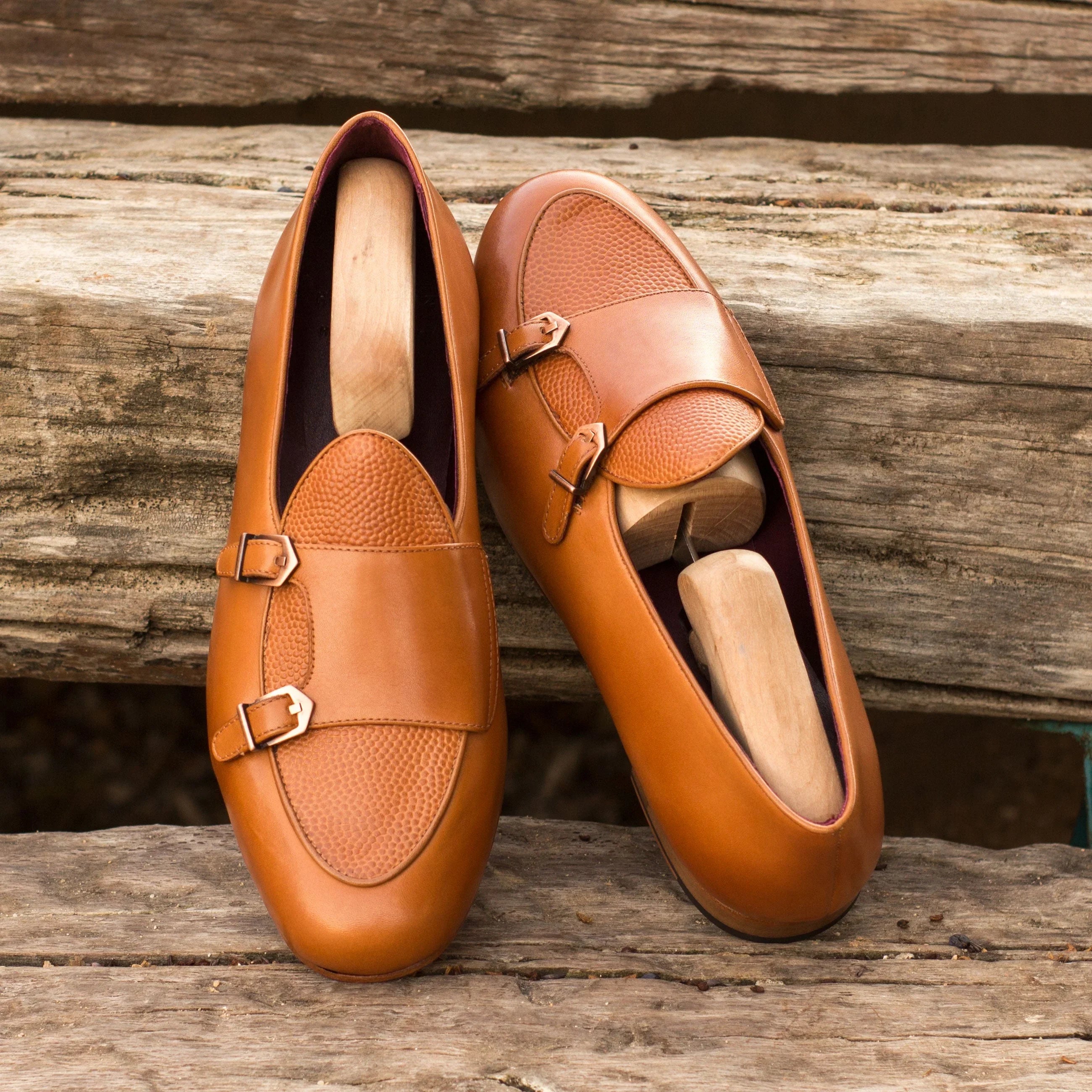
Der Abendschuh: Wie ein viktorianischer Hausschuh zum selbstbewusstesten Akzent der Herrenmode wurde

There is a particular kind of confidence in wearing a shoe that was never meant to leave the house. The evening slipper — soft, low, often velvet, frequently monogrammed — is the sartorial equivalent of answering the door in a silk dressing gown and somehow looking better dressed than your guests. It is the least practical shoe a man owns and, arguably, the most revealing. You cannot hide behind a slipper. There are no laces to fuss with, no storm welts to signal ruggedness, no cap toe doing the respectable work of a proper Oxford. There is only the foot, the fabric, and the wearer's nerve.
Which is exactly why the slipper has quietly refused to die, surviving from the drawing rooms of Victorian England to the front rows of Milan and Paris, and lately onto the feet of men who have never owned a smoking jacket in their lives.
Blame Prince Albert
The story usually starts, as so many good menswear stories do, with a nineteenth-century aristocrat who couldn't be bothered to change. Prince Albert, Queen Victoria's consort, is credited with popularising the velvet house shoe that still bears his name: a low-cut, quilted-lined slipper worn indoors with evening dress. The Albert slipper was a shoe for the gentleman at leisure in his own home — smoking a cigar, retreating to the library, receiving intimates rather than the public. It was comfort dressed up in the trappings of formality, which is a very English idea.
Two design details survived to become the genre's signatures. The first was velvet, usually in midnight blue, bottle green, burgundy or black — colours deep enough to read as serious under low light. The second was the monogram or motif hand-embroidered on the vamp: initials, a family crest, a fox mask for the hunting set, a skull for the man who wanted you to know he found the whole tradition amusing. Bespoke slipper makers in London have been stitching these little heraldic jokes for well over a century, and the appeal hasn't changed. A monogrammed slipper is a shoe that could only belong to one person. That is the entire point.

From the fireside to the red carpet
What began as private wear staged a slow, cheerful invasion of public life across the twentieth century. Hollywood's leading men wore velvet slippers with dinner jackets and made them look like the height of ease rather than eccentricity. By the time the tuxedo had fully democratised, the evening slipper had become the connoisseur's alternative to the patent Oxford — the choice of the man who had done black tie enough times to want to enjoy it.
Fashion houses noticed. Over the last two decades the velvet slipper has been reintroduced, remixed and occasionally abused by designers on both sides of the runway — some treating it with reverence, others slapping bees, tigers and cartoon flames across the toe. Whatever you think of the maximalist versions, they proved a useful point: the slipper is a canvas. Its blank, seam-free vamp is practically begging for decoration, which is why it lends itself so naturally to the world of hand-finished colour and made-to-order flourish.

A red velvet, tassel-trimmed slip-on like Que Shebley's Ivymain Wellington is the modern descendant of Albert's fireside shoe — a piece that would look entirely at home under a shawl-collar dinner jacket on New Year's Eve, or worn with rolled tailored trousers by a man who has decided that the party's dress code is a suggestion rather than a law. Worn with confidence, it reads as taste. Worn tentatively, it reads as fancy dress. The shoe demands you commit.

The Belgian cousin
The Albert slipper's more discreet relative arrived from Continental Europe: the Belgian loafer. Popularised in the mid-twentieth century by a Belgian atelier whose shoes were assembled inside-out for a softer, more slipper-like feel, the Belgian loafer took the domestic ease of the house shoe and made it street-legal. Its calling card is a small, flat bow on the vamp — a detail borrowed straight from the boudoir slipper — and an almost unstructured, glove-like fit.
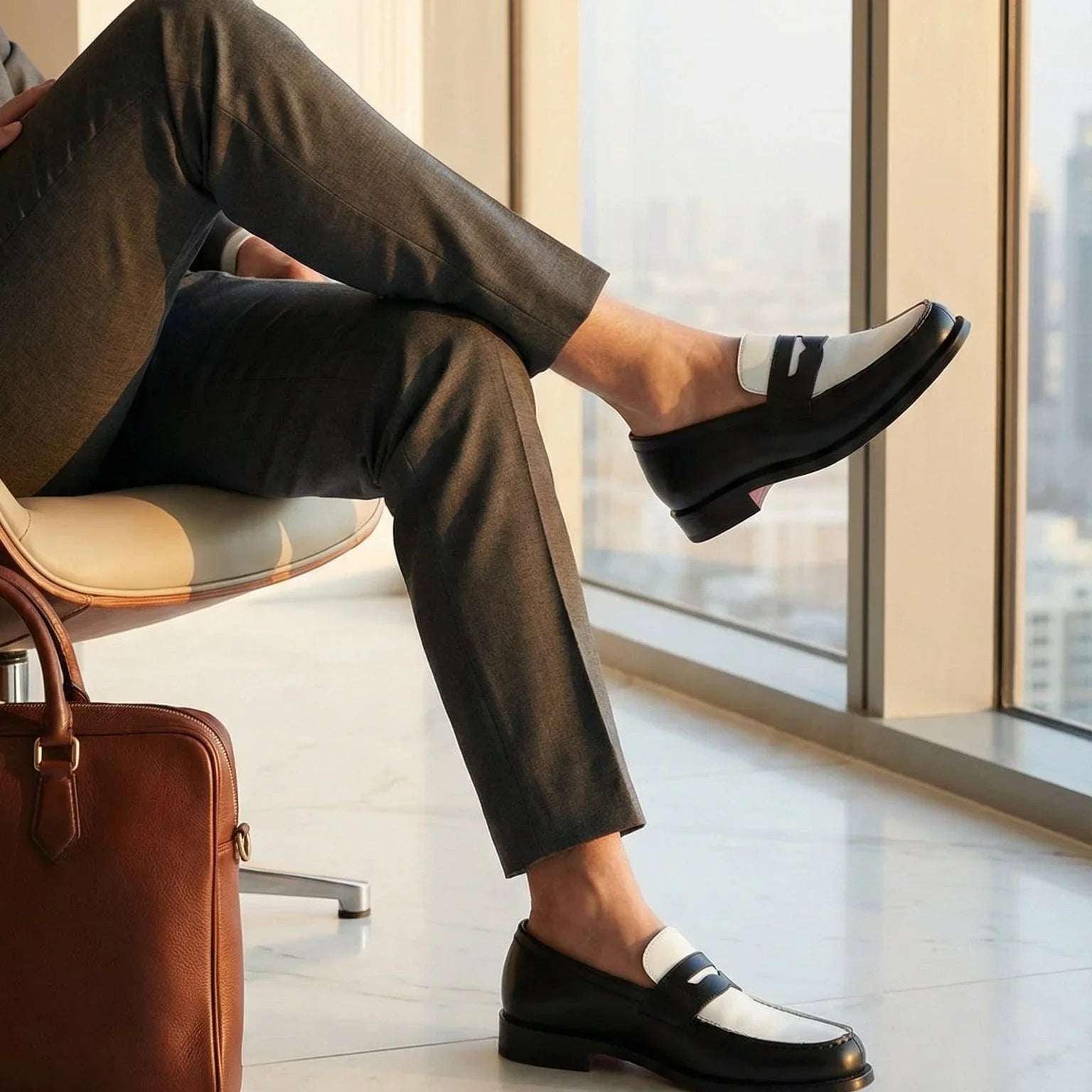
Where the velvet Albert says evening, the Belgian loafer says old money on holiday. It became a uniform of a certain moneyed American set: worn sockless on Nantucket, with linen in Palm Beach, with grey flannel in a Manhattan corner office. It is a shoe that whispers, and that restraint is its power. In burnished leather it slips under a suit; in suede it belongs to weekends and warm evenings.

How to wear one without looking like you're trying
The evening slipper fails only when it's treated as a costume. Handled correctly, it is one of the easiest routes to looking genuinely, effortlessly dressed. A few principles:
- Let the shoe be the loudest thing. A velvet slipper wants a quiet outfit around it — plain trousers, a dark jacket, nothing competing for attention. The shoe is the punctuation, not the paragraph.
- Mind the hosiery. With black tie, a fine dark sock or over-the-calf silk. With a Belgian loafer in summer, bare ankles are permitted and even encouraged, provided the trouser breaks cleanly.
- Colour is the entire game. Burgundy, forest green, midnight blue and deep aubergine flatter far more than they frighten. This is also where the tassel loafer overlaps the slipper's territory — a burnished tassel model bridges evening polish and daytime ease.
- Keep the trouser leg trim. A slim, tapered line lets the shoe read as intentional. Too much fabric pooling over the vamp drowns the whole effect.

The case for making it your own
The slipper's deepest appeal is that it has always been personal. Albert's had his household's crest; the Belgian bow was a signature you could spot across a room; the great slipper makers built their names on the willingness to embroider a man's initials, his club, his private joke onto the toe of a shoe only he would ever wear. That instinct — a shoe made to a single person's specification and hand-finished in colour — is precisely the tradition a made-to-order house like Que Shebley draws on, whether through Italian crust leather taken to a bespoke patina or a design conceived from scratch.
Because in the end, that is what the evening slipper has always been about. Not comfort, though it is comfortable. Not formality, though it can be very formal. It is about a man deciding that when the day's obligations are over and the night is his own, he would like to be recognised — from the ankles down — as nobody else. Prince Albert understood that by the fireside. It holds just as true walking into a party a century and a half later.

Einen Kommentar hinterlassen
Diese Website ist durch hCaptcha geschützt und es gelten die allgemeinen Geschäftsbedingungen und Datenschutzbestimmungen von hCaptcha.