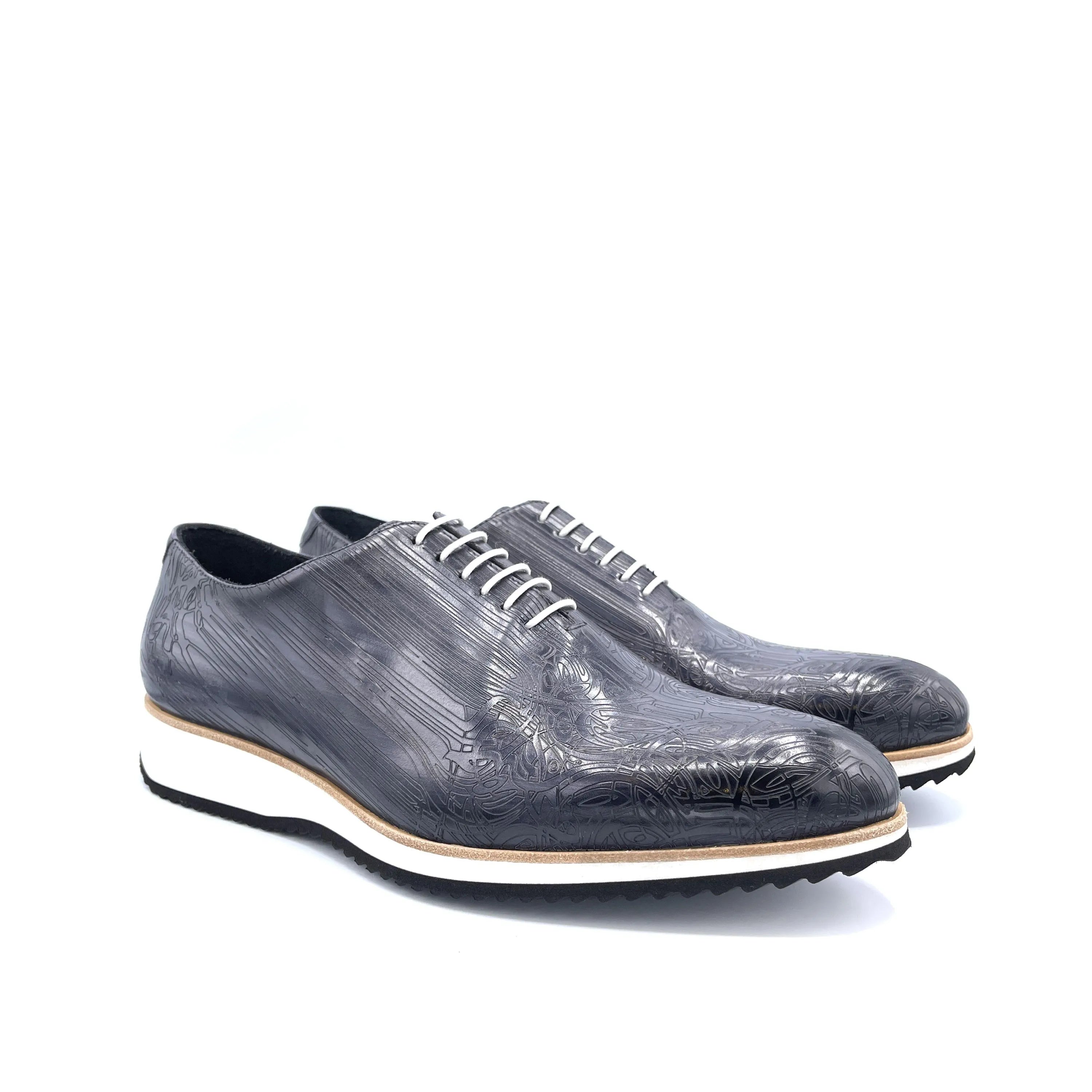
One Piece, No Seams: The Quiet Radicalism of the Wholecut Shoe
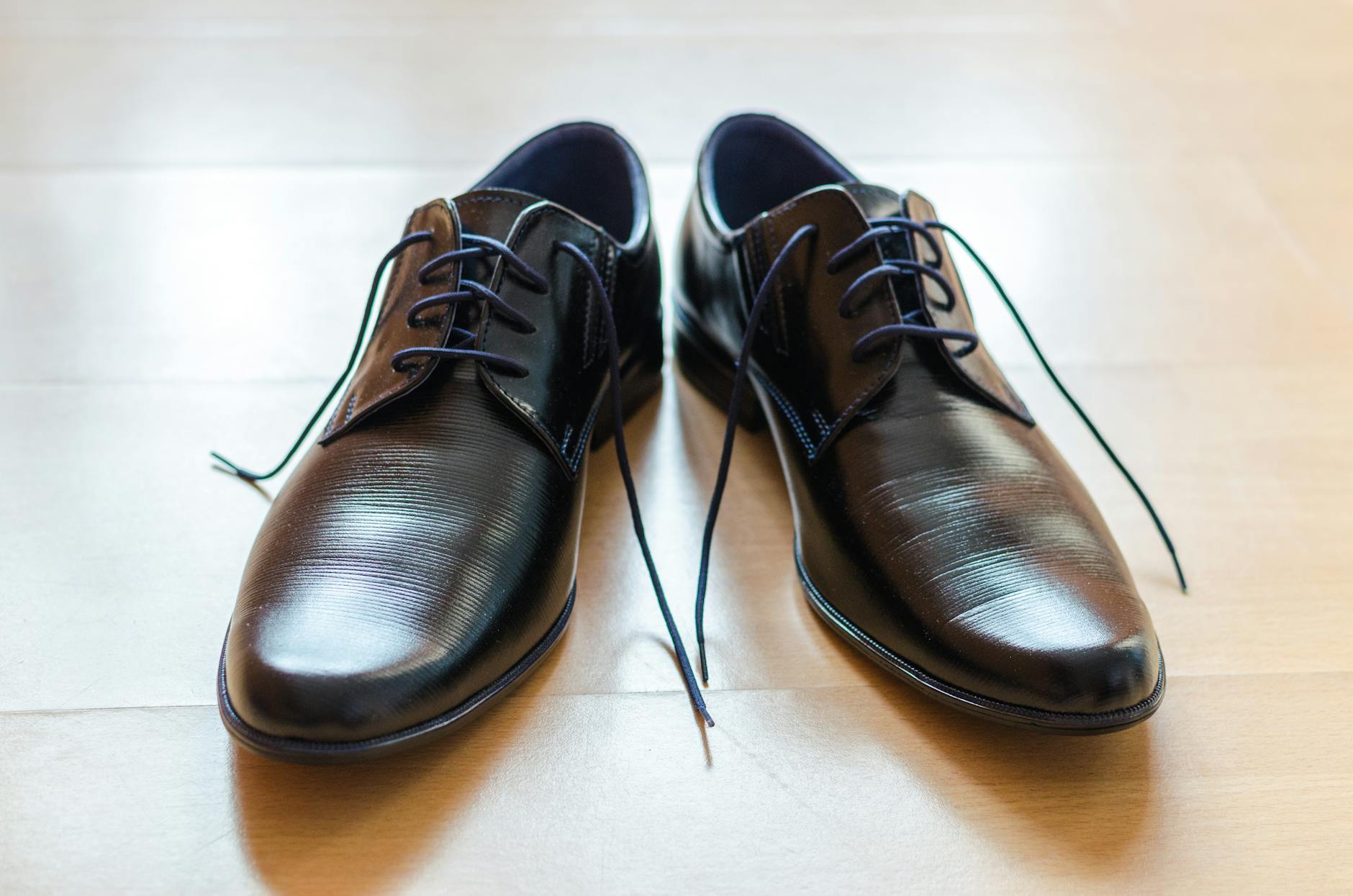
There is a certain kind of menswear obsessive who can identify a good shoe from across a room, and a great one from the way it holds light along the vamp. To that person, nothing announces itself quite like a wholecut—precisely because it refuses to announce anything at all. No brogueing. No cap. No stitched seam breaking up the surface. Just a single sweep of leather rising from the welt to the topline, as if the shoe had been poured rather than assembled.
It is the most minimal dress shoe in existence, and paradoxically the hardest to make well. Which is exactly why it deserves a closer look.
The tyranny of a single piece
Most dress shoes are an act of negotiation. An oxford's cap toe hides the point where leather takes the most abuse. A brogue's punched holes and serrated edges were originally functional and are now a designer's best friend: every seam is a chance to disguise a slightly imperfect hide, to join two good pieces and skip the flawed inch in between. The wholecut throws all of that away.
Because it is cut from one piece of leather—wrapped around the last and typically closed with a single seam at the heel—there is nowhere to hide. A scar, a stretch mark, a loose grain, a wrinkle that breaks the wrong way: any of these ruins the whole shoe. Tanneries know this. When a hide is destined for wholecuts, only the cleanest sections of the very best skins will do, and a large share of each hide is discarded or downgraded. That waste is the reason a properly made wholecut sits where it does on the price ladder, and why plenty of otherwise capable makers simply don't attempt it.
The lasting is unforgiving too. Pull the leather over the last unevenly and the vamp puckers; the single heel seam has to land dead straight or the eye catches it instantly. There is no decorative element to rescue a rushed job. As one old workshop maxim goes, a brogue forgives the maker and a wholecut exposes him.

A short history of restraint
The wholecut is not new, though it feels perpetually modern. Its roots run back to the same late-Victorian and Edwardian shoemaking culture that gave us the oxford and the balmoral, when English and American makers were refining the closed-lacing dress shoe into its final grammar. For decades it lived quietly in the wardrobes of men who understood that the most expensive-looking thing you can wear is often the plainest.
Then two forces pushed it forward. The first was the mid-century appetite for clean lines—the same instinct that made a Dieter Rams radio or a Cary Grant lounge suit look effortless. The second, much more recent, was the rise of Italian and artisanal shoemaking as objects of connoisseurship. Houses across Northampton and the Italian shoe towns turned the wholecut into a flex, a way of saying: look how good our leather is, we didn't need to cover any of it up. Today you'll find it in the collections of nearly every serious maker, precisely because it functions as a kind of quality certificate.
Why it flatters
Aesthetics follow from all this restraint. Without seams to interrupt it, a wholecut reads as one long, elegant line, which visually lengthens the foot and lends even a stocky shoe a certain grace. It is the dress equivalent of a well-cut single-breasted suit in a solid cloth: quiet, deliberate, and impossible to date.
That plainness is also what makes it the most versatile black shoe a man can own. A wholecut in black calf is arguably more black-tie-appropriate than a captoe oxford, more boardroom-serious than a monk, and more forgiving with a navy suit than almost anything else. If you were allowed exactly one pair of formal shoes for a wedding, a funeral, a promotion and a first day, this is the silhouette to argue for.

A pair like Que Shebley's Proper Wholecut is the archetype: high-shine black, uninterrupted vamp, the sort of shoe that looks like nothing and works with everything. It is the pair you learn to spit-shine on the toe until you can check your part in it.
The plot twist: a blank canvas for colour
Here's where the wholecut gets genuinely interesting. The same unbroken surface that makes it so austere in black turns it into the perfect canvas for the exact opposite—hand-applied patina, the shoemaker's answer to painting.
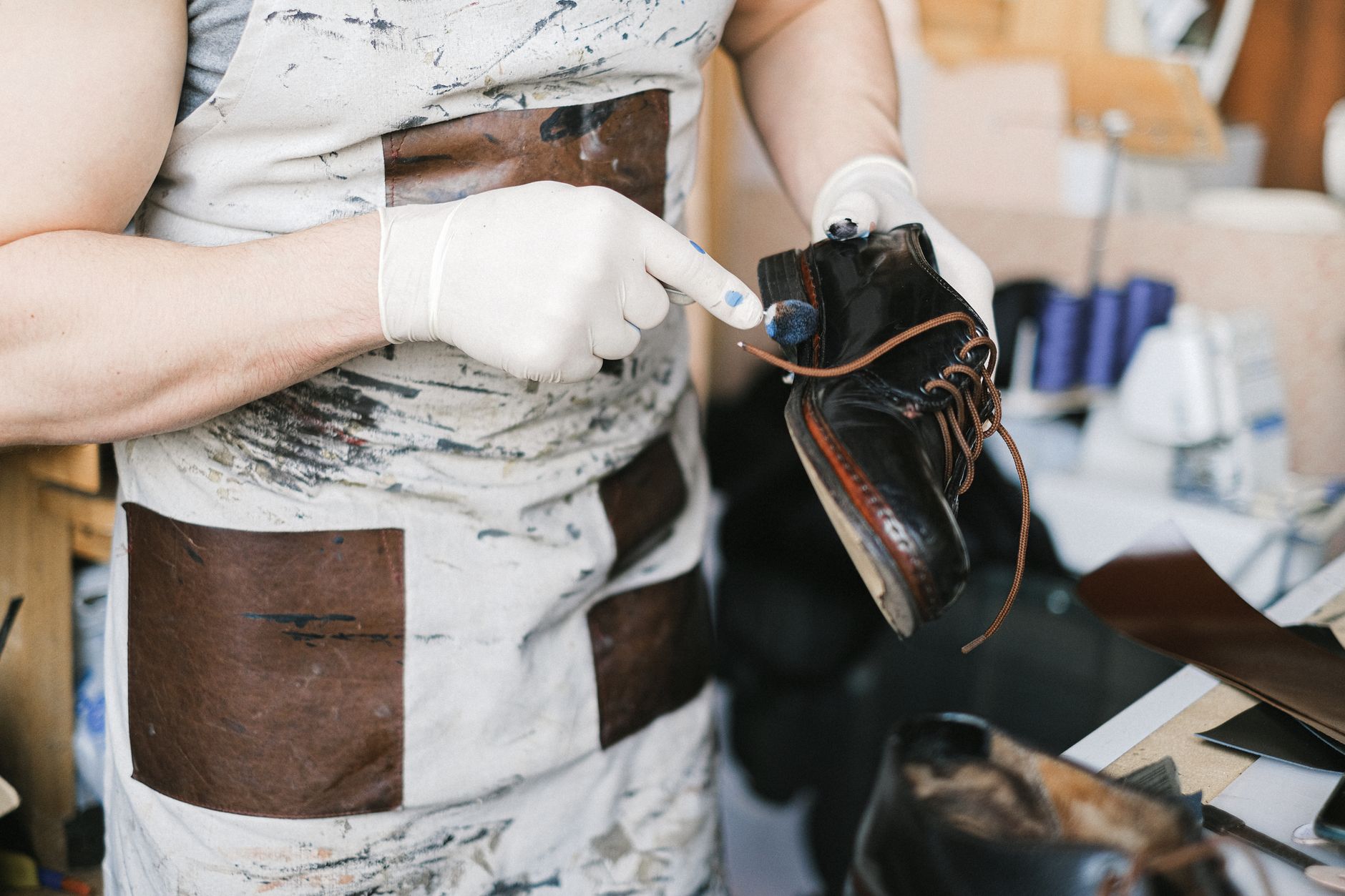
Patina relies on undyed "crust" leather that finishers colour by hand, building up translucent layers so light travels through them the way it does through varnish on an old violin. On a brogue, all that punching and stitching chops the effect into fragments. On a wholecut, the colour has room to breathe: highs and lows, a burnished toe fading into a deeper heel, tonal shifts that no two pairs share. The artisan is working on the leather equivalent of a clean sheet of paper.

The El President wholecut shows what that looks like when the brush goes to work in brown—a graduated finish that would be impossible to replicate exactly, which is rather the point. Push the idea further and the surface stops being merely coloured and becomes decorated: script, calligraphy, near-abstract mark-making laid onto the leather itself.

The Script Two Patina Wholecut takes the blank canvas literally, treating the vamp as somewhere to write rather than merely dye. It's a long way from the funeral-serious black pair above—and yet it is the same fundamental object, which tells you everything about how much range lives inside such a simple shape.
How to wear one, and how to buy one
A few honest notes for anyone tempted:
- Start plain, then experiment. A black or dark-brown wholecut is the most useful dress shoe you can buy. Earn the patina pair once the plain one has proved its worth.
- Mind the fit. With no seams to give, a wholecut relies on the last's shape to hug the foot. Try before you commit, and give the leather a wear or two to settle.
- Inspect the vamp in good light. The whole promise of the shoe is a clean, unmarked surface. Tilt it toward a window; the leather should look calm and even, the heel seam straight.
- Keep it fed. One unbroken expanse of calf shows dryness and cracking faster than a busy brogue. A regular wipe and a good cream keep the surface—and any patina—alive.
The wholecut will never be the loudest shoe in the room. That was never its ambition. Its confidence is the confidence of subtraction—of a maker who trusts the leather, the last and his own hands enough to leave everything else out. In a wardrobe full of shoes trying to say something, there's a real luxury in owning the one that simply doesn't have to.

Deja un comentario
Este sitio está protegido por hCaptcha y se aplican la Política de privacidad de hCaptcha y los Términos del servicio.