
La grande manœuvre du Penny Loafer : comment une chaussure de ferme norvégienne s'est invitée dans toutes les pièces qui comptent

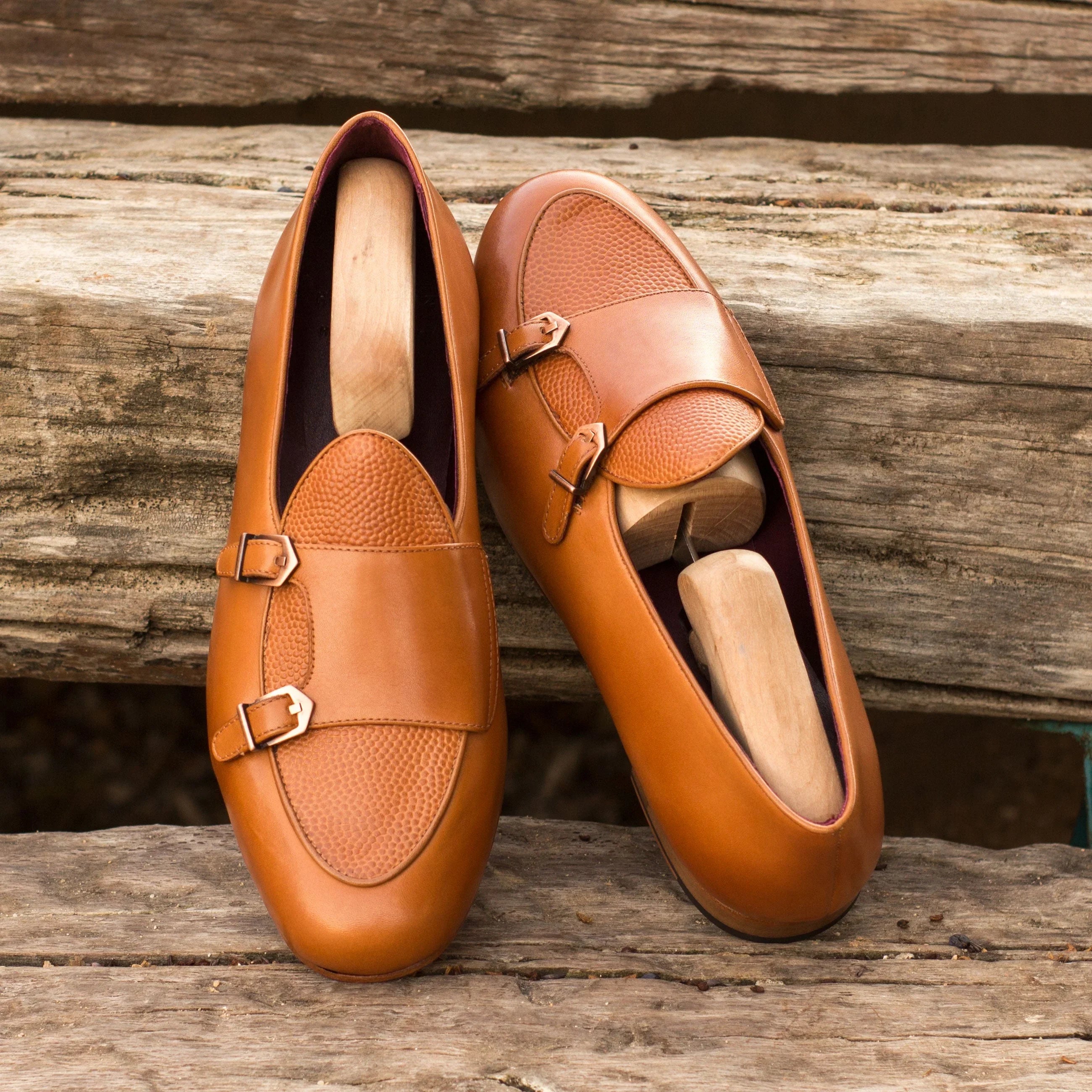
No shoe in a man's wardrobe has bluffed its way further up the social ladder than the loafer. It arrived with hay on its heels and left wearing a suit. Today it turns up at black-tie afterparties, on trading floors, at Pitti Uomo, and on the feet of men who have never once slid a coin into the little leather slot that gave the thing its name. That is quite a journey for a shoe that started life as informal footwear for Norwegian dairy farmers.
The loafer's genius is that it never looks like it is trying. Everything else about tailored dressing announces effort — the knotted tie, the polished oxford, the pocket square folded to a point. The loafer simply slips on. And in menswear, the appearance of ease is the highest currency there is.
From a Norwegian farm to a Maine catalogue
The origin story is genuinely rural. In the early twentieth century, farmers in the Aurland region of Norway made a soft slip-on moccasin for working around the barn. The design travelled — partly through visiting Americans, partly through export — and by the mid-1930s it had caught the eye of the Massachusetts shoemaker G.H. Bass, who tidied it up, added a strip of leather across the vamp with a diamond-shaped cut-out, and called it the Weejun (a clipped nod to "Norwegian").
The cut-out is the detail that made the legend. Students, the story goes, began tucking a penny into the slot — enough, in an emergency, for a payphone call home. The name stuck harder than the coin ever did. What Bass had really invented was not a shoe but a signal: a piece of footwear that said you belonged to a certain kind of relaxed, moneyed American ease without saying anything at all.

The Ivy League adopts a mascot
By the 1950s the penny loafer had become the unofficial uniform of the American campus. Worn with chinos, oxford-cloth button-downs and rolled sleeves, it was central to the look now catalogued as Ivy or preppy — the aesthetic that Ralph Lauren would later spend a career distilling and selling back to the world. The loafer's appeal on the quad was the same as on the farm: you could throw it on and forget about it. It just happened that the men throwing it on were headed to law school rather than the milking shed.
The shoe crossed into public life through the era's tastemakers. It read as casual but never careless — the footwear equivalent of a man who owns a boat but doesn't mention it. And crucially, it looked as good scuffed as it did shined, which meant it aged in a man's favour rather than against him.
Then Gucci put a bit of hardware on it
The loafer's second great leap came in 1953, when Gucci introduced a slip-on trimmed with a gilded horsebit across the vamp. This was a different proposition entirely: Italian, glossy, unapologetically expensive. The horsebit loafer took everything the American penny loafer implied about leisure and gave it a passport and a tan. By the 1960s and '70s it had become shorthand for a particular breed of international sophisticate — the man who summered on the Med and wore his loafers, famously, with no socks and a great deal of confidence.
The two traditions have coexisted ever since. There is the collegiate American penny loafer, honest and slightly scholarly, and there is the polished Continental slip-on, worn with tailoring and a certain swagger. Richard Gere's wardrobe in American Gigolo pushed the Italian version firmly into the culture; a generation later, the loafer would be reinterpreted by everyone from The Row to Gucci's own chunky-soled revival, proving the silhouette can carry almost any mood you hang on it.
Wall Street, the runway, and the modern moment
The loafer's flirtation with formality is where it gets interesting. Strictly speaking, a slip-on is less dressy than a laced oxford; the old rule says loafers stop at the boardroom door. But menswear has spent thirty years loosening its own collar, and the penny loafer has been the chief beneficiary. Worn with a navy suit and no tie, it now reads as the deliberate choice of a man who knows the rules well enough to bend one. Worn with cropped trousers and bare ankles, it is the summer look of half of Milan.
What has changed most is colour and finish. The classic remains black or oxblood calf — the version that will outlast every trend and quietly go with everything.

But the modern loafer is also a canvas. Two-tone constructions nod to the spectator tradition without shouting; a navy-and-white pairing manages to feel both nautical and collegiate, at home on a boat deck or a garden-party lawn.

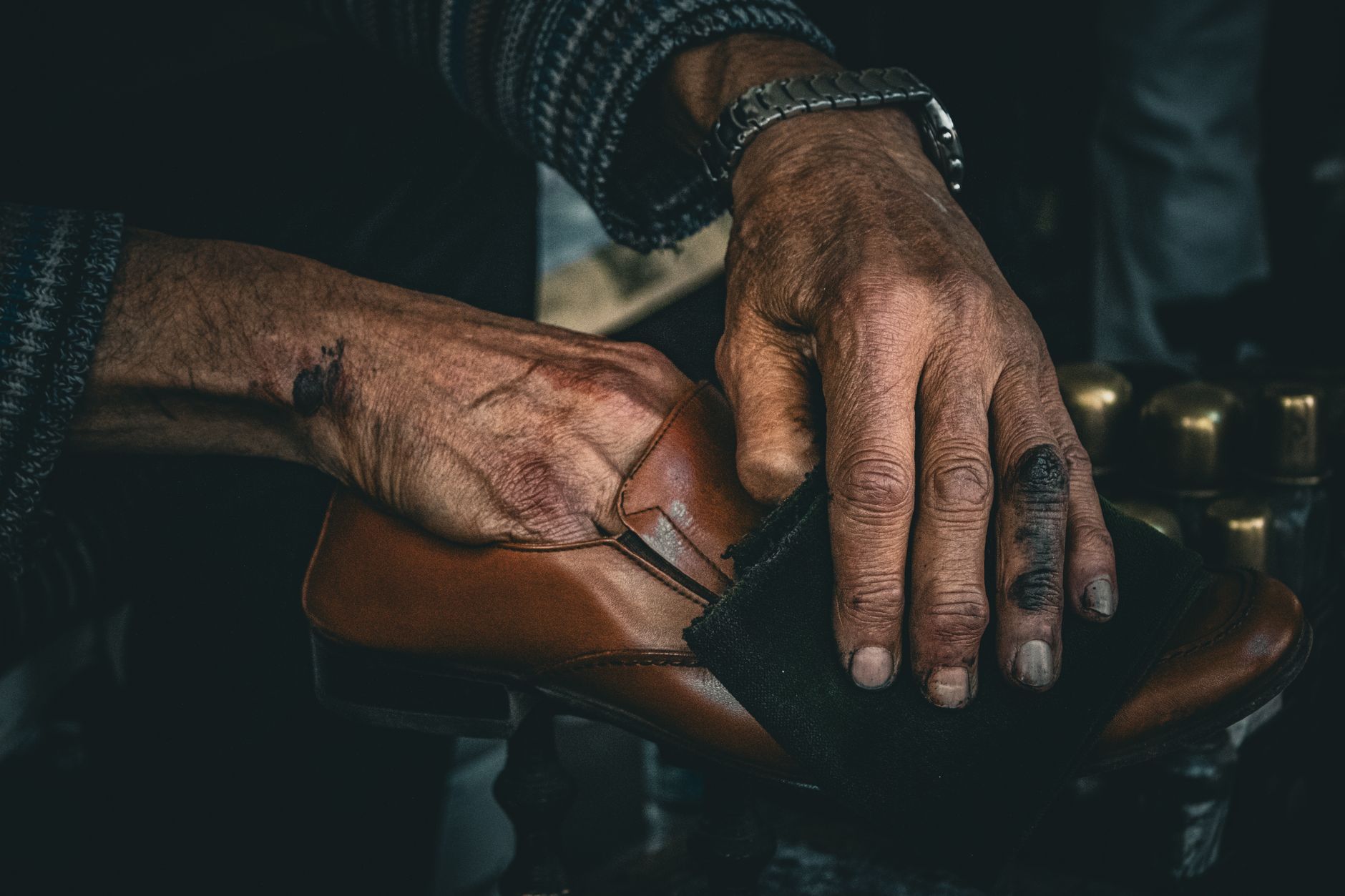
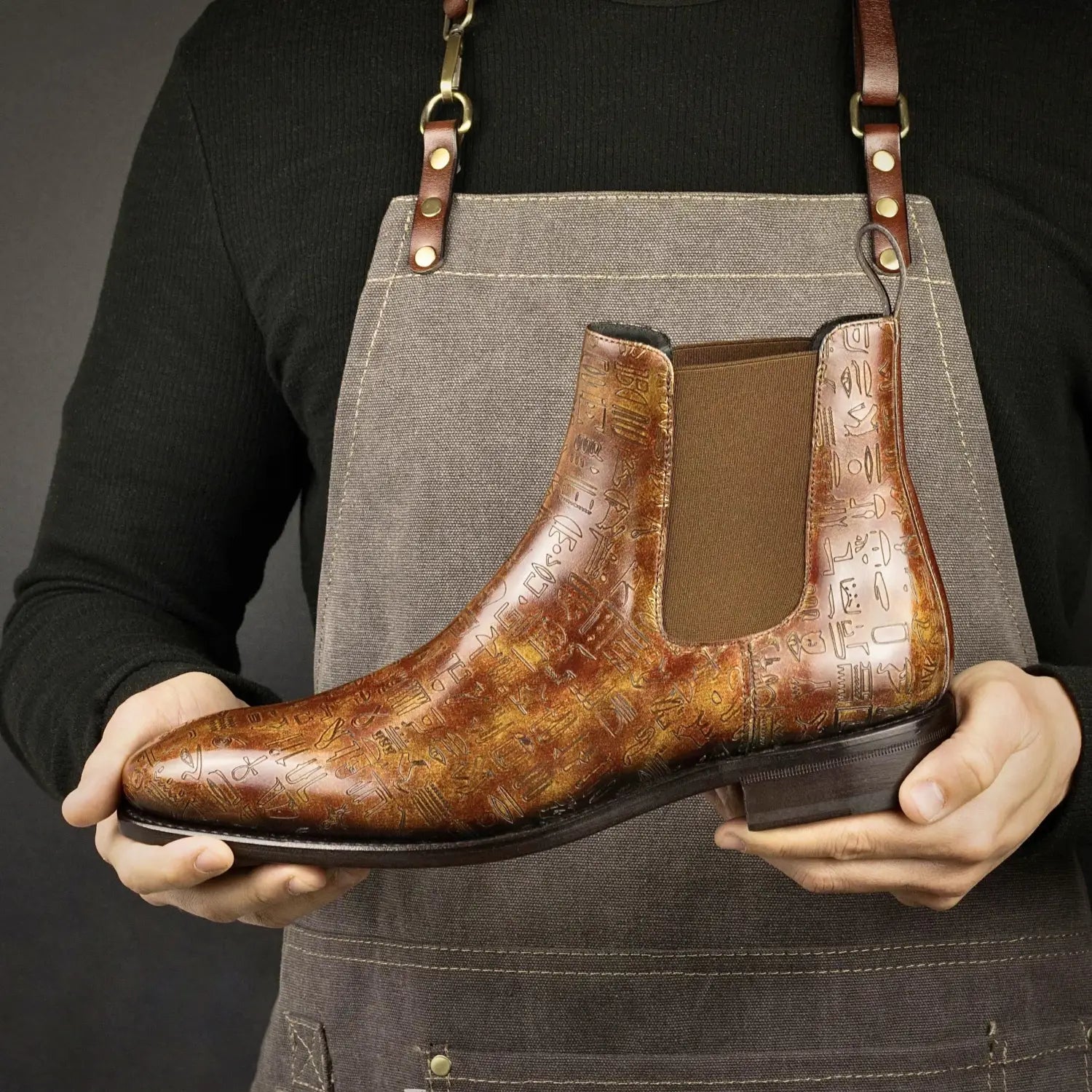
And then there is patina — the hand-finishing technique, borrowed from the great French and Italian ateliers, in which colour is painted and burnished into pale crust leather by hand so that no two pairs are identical. A patina loafer in a deep, shifting blue is the sort of shoe that looks black in a boardroom and comes alive in sunlight; it is where the loafer's farmyard modesty finally meets genuine luxury. Made-to-order houses such as Que Shebley build exactly this kind of shoe in Italian crust leather, letting a buyer choose the depth and hue of the finish — the modern equivalent of that student's personalising penny, only rather more considered.

How to wear one now
The loafer is forgiving, but it is not lawless. A few principles hold:
- Mind the trouser break. The loafer wants to be seen. A slightly shorter, cleaner hem — a small break or none at all — lets the shoe do its job. A trouser puddling over the vamp kills the whole effect.
- Sock or no sock is a real decision. Bare ankles read Mediterranean and summery; invest in no-show socks so the leather doesn't rot. In cooler months, a fine ribbed sock in a tonal or contrasting colour is the more grown-up move.
- Match the finish to the occasion. A polished black or burgundy penny loafer handles a suit; suede and two-tone belong to weekends, travel, and the warmer half of the calendar.
- Let them age. The loafer is one of the few shoes that improves with honest wear. Keep them fed with cream, rotate them, and resist over-polishing. Character is the point.
That, in the end, is the shoe's long con. It pretends to be the least serious thing in your wardrobe — the one you grab without thinking — while quietly doing more work than almost anything else you own. A farm shoe that learned to wear a suit and never lost its nerve. Slip one on and you inherit the whole century of bluff.

Laisser un commentaire
Ce site est protégé par hCaptcha, et la Politique de confidentialité et les Conditions de service de hCaptcha s’appliquent.