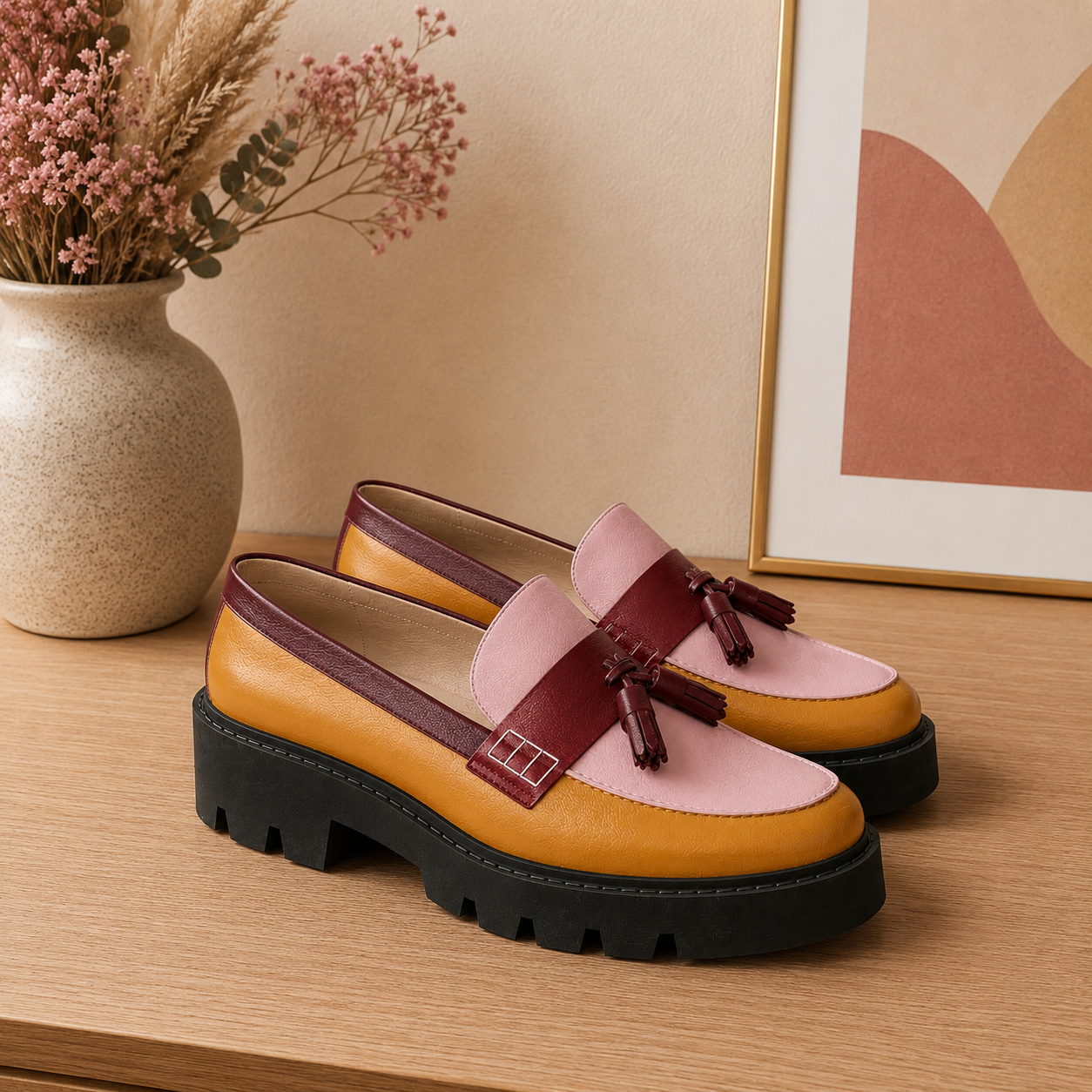
The Tassel Loafer: How a Movie Star's Souvenir Became the Establishment's Favourite Shoe

Every so often a shoe manages to be two contradictory things at once: relaxed and formal, playful and serious, off-duty and utterly on-message. The tassel loafer is the reigning champion of that trick. It has no laces, no straps, no obvious purpose beyond the two small pendulums of leather swinging over the vamp — and yet, for the better part of a century, it has been the footwear of choice for people who make decisions for a living. Bankers, litigators, senators, studio heads. And, increasingly, women who have decided that the boardroom's best-kept secret works rather well on their own terms.
How a shoe with decorative fringe ended up signalling authority is one of menswear's stranger origin stories — and it starts, as many good ones do, with a holiday.
A souvenir, an idea, and a factory in New England
The commonly told account credits the actor Paul Lukas, a Hungarian-born matinee performer who won an Oscar in the 1940s. Travelling in Europe, Lukas is said to have picked up a pair of lace-up shoes finished with decorative tasselled cords and become quietly obsessed with them. Back in the United States, he took the shoes to several American makers and asked them to reproduce the effect.
The problem, and eventually the breakthrough, was the tassels. Reworking them into a slip-on rather than a lace-up gave the New England shoemakers who took on the challenge — the Alden Shoe Company is most often credited — something entirely new: a loafer with the tailored front of a dress shoe and the fringe of something far less buttoned-up. By around 1950 the tassel loafer existed as its own creature, neither quite the penny loafer nor the Oxford, and it began its slow march into the American wardrobe.
What followed was a masterclass in how objects acquire meaning. Sold through the great East Coast furnishers, the tassel loafer was adopted first by the Ivy League and then by the professions the Ivy League fed into. By the 1960s and '70s it had become shorthand for a certain kind of establishment confidence, worn with a grey flannel suit and an expression of unshakeable certainty.

The lawyer's shoe — and the joke about it
Somewhere along the way the tassel loafer picked up a reputation. It became, only half-affectionately, "the lawyer's shoe" — the footwear of partners, lobbyists, and management consultants, worn with a suit but never with anything so try-hard as a lace-up. There was a period in the 1980s and '90s when a well-shined tassel loafer under a pinstripe suit was practically a professional uniform in Washington and on Wall Street; the shoe telegraphed that you had arrived and no longer needed to prove it with your feet.
That's the fascinating part. The tassel loafer is technically less formal than an Oxford — a loafer is a slip-on, after all — yet it came to read as more powerful, precisely because wearing one with a serious suit is a small act of confidence. It says the rules apply to other people. Menswear is full of these coded signals, and few are as quietly loaded as a bit of leather fringe.
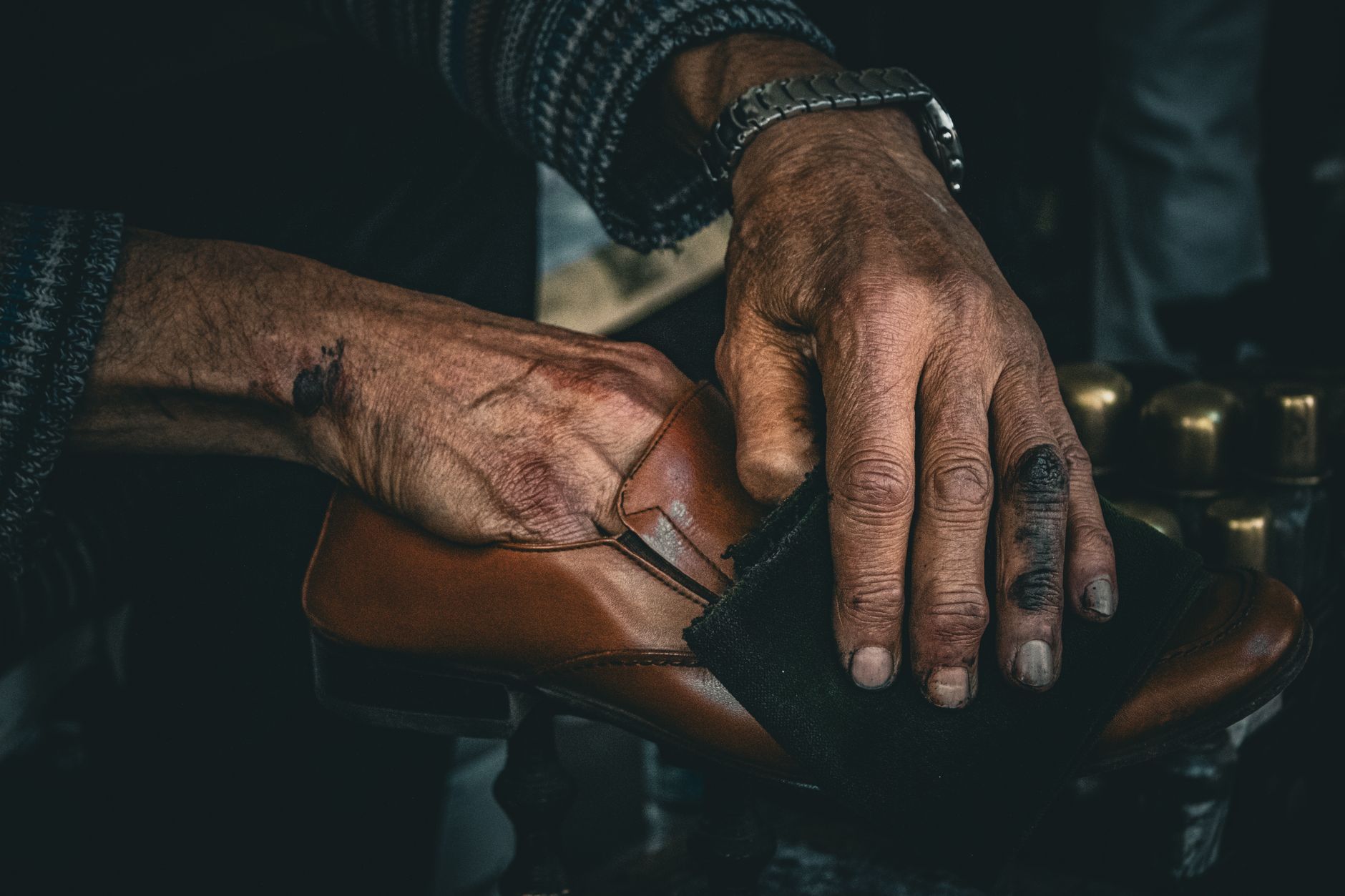
Why it works: the anatomy of a good tassel loafer
Strip away the mythology and the tassel loafer earns its place on pure design merit. The best examples get a few things exactly right:
- Proportion of the tassels. Too large and the shoe tips into costume; too small and it loses its charm. The tassels should sit like a well-tied bow — present, but not shouting.
- A clean, elongated last. The slip-on construction means nothing interrupts the line from toe to heel, so the shape of the last does all the talking.
- Leather with depth. Because the design is so pared back, the character has to come from the hide itself — the way it catches light, holds a burnished edge, and deepens with wear.
That last point is where the finest tassel loafers separate themselves. A flat, uniform colour looks fine on day one and forgettable thereafter. A hand-finished patina, built up in layers on Italian crust leather, gives the shoe the kind of lived-in richness that most people associate with vintage — except you get to build it yourself, from the first wear.
The shoe changes hands
The most interesting recent chapter in the tassel loafer's life is that women took it and improved on the joke. On a woman, the shoe's establishment baggage becomes something more interesting: a borrowed authority worn deliberately, with slim trousers, with denim, with a slip dress that makes the whole thing look effortless. Where a heel insists, a tassel loafer implies — and implication, most of the time, is the more elegant move.

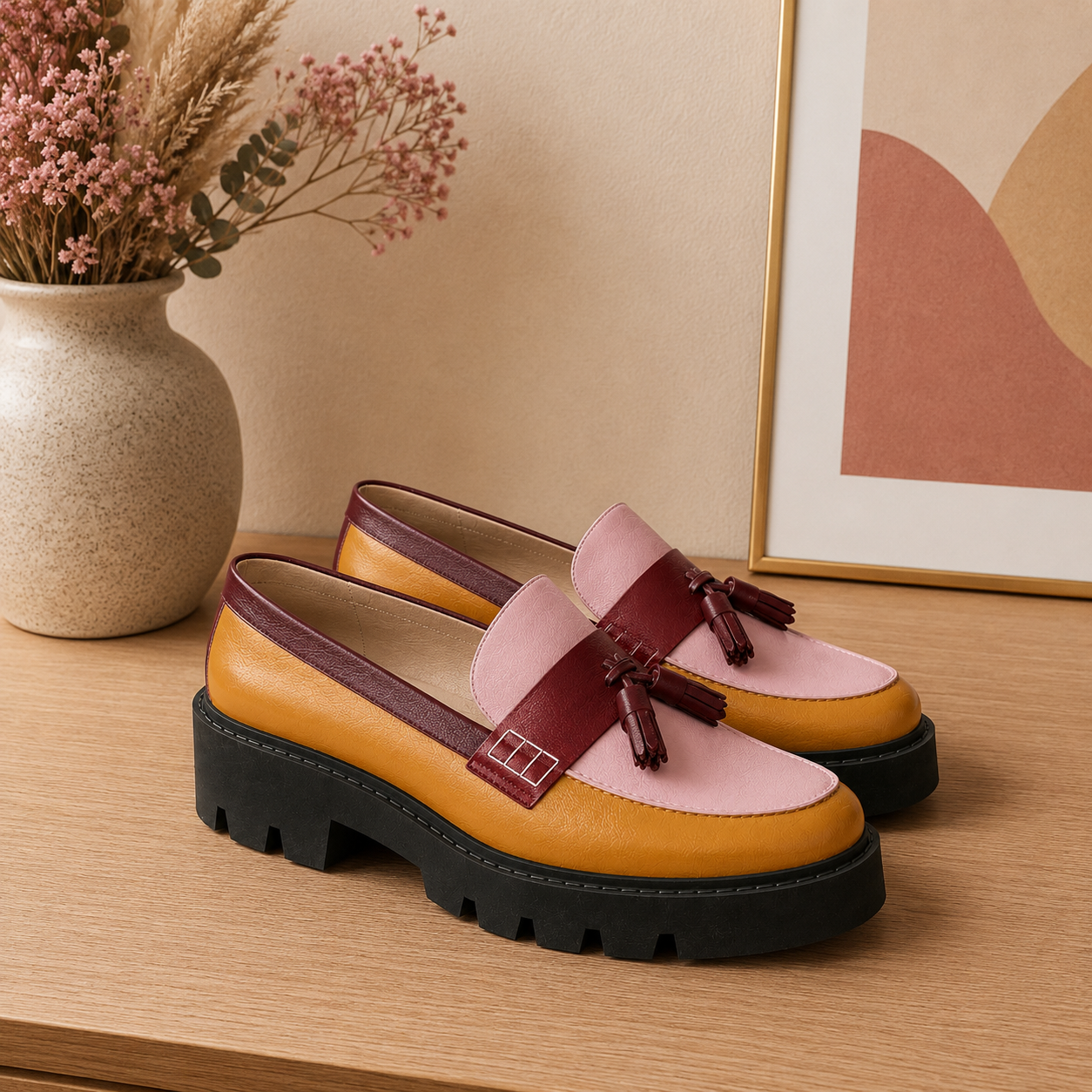
Que Shebley's Farah Tassel Loafers read like a considered translation of that history — the traditional fringe and the low, trim last of the classic version, but built as a made-to-order shoe in crust leather that can be finished in a patina of your choosing. It is, in other words, the establishment shoe with the establishment's permission removed. You decide the colour, the depth, the degree of drama.
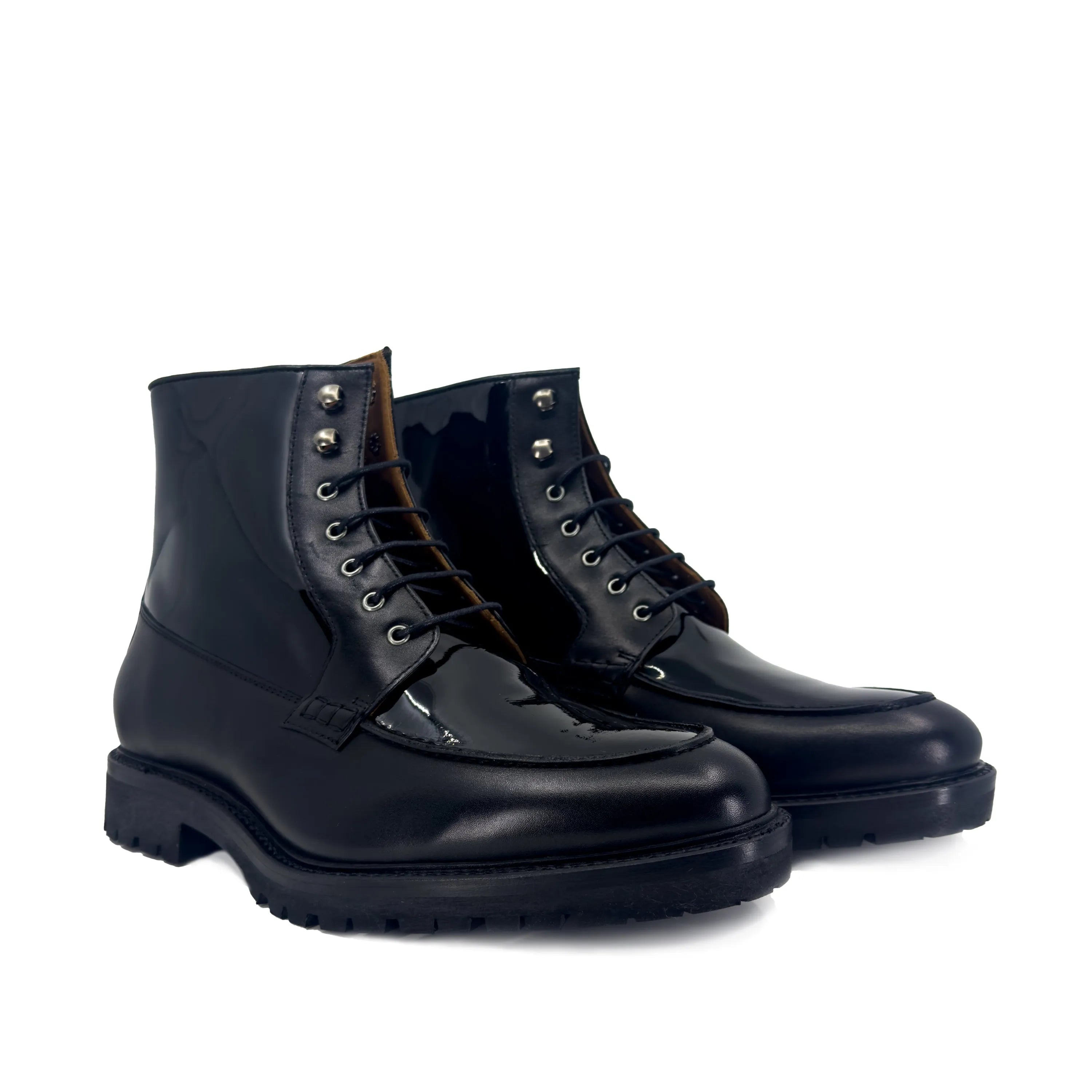
For those who find even the tassel too much of a flourish, there is the loafer's more minimalist relative — the clean, unadorned slip-on that lets the leather and last carry the whole design.

How to wear it now
The mistake people make with the tassel loafer is treating it as either fully formal or fully casual. Its whole appeal is that it refuses to choose. Wear it with tailored trousers and it dresses the outfit up while keeping it human; wear it with rolled denim or cropped chinos, no socks, and it does the opposite, lending a bit of grown-up polish to something loose. The one context it rewards above all is confidence — this was never a shy shoe.
Seventy-odd years after a movie star came home with a curious souvenir, the tassel loafer has survived every trend cycle that tried to date it, precisely because it was never really about fashion. It was about a certain attitude: that the most persuasive kind of authority is the kind that looks completely at ease. The fringe was always just the punchline.

Laisser un commentaire
Ce site est protégé par hCaptcha, et la Politique de confidentialité et les Conditions de service de hCaptcha s’appliquent.