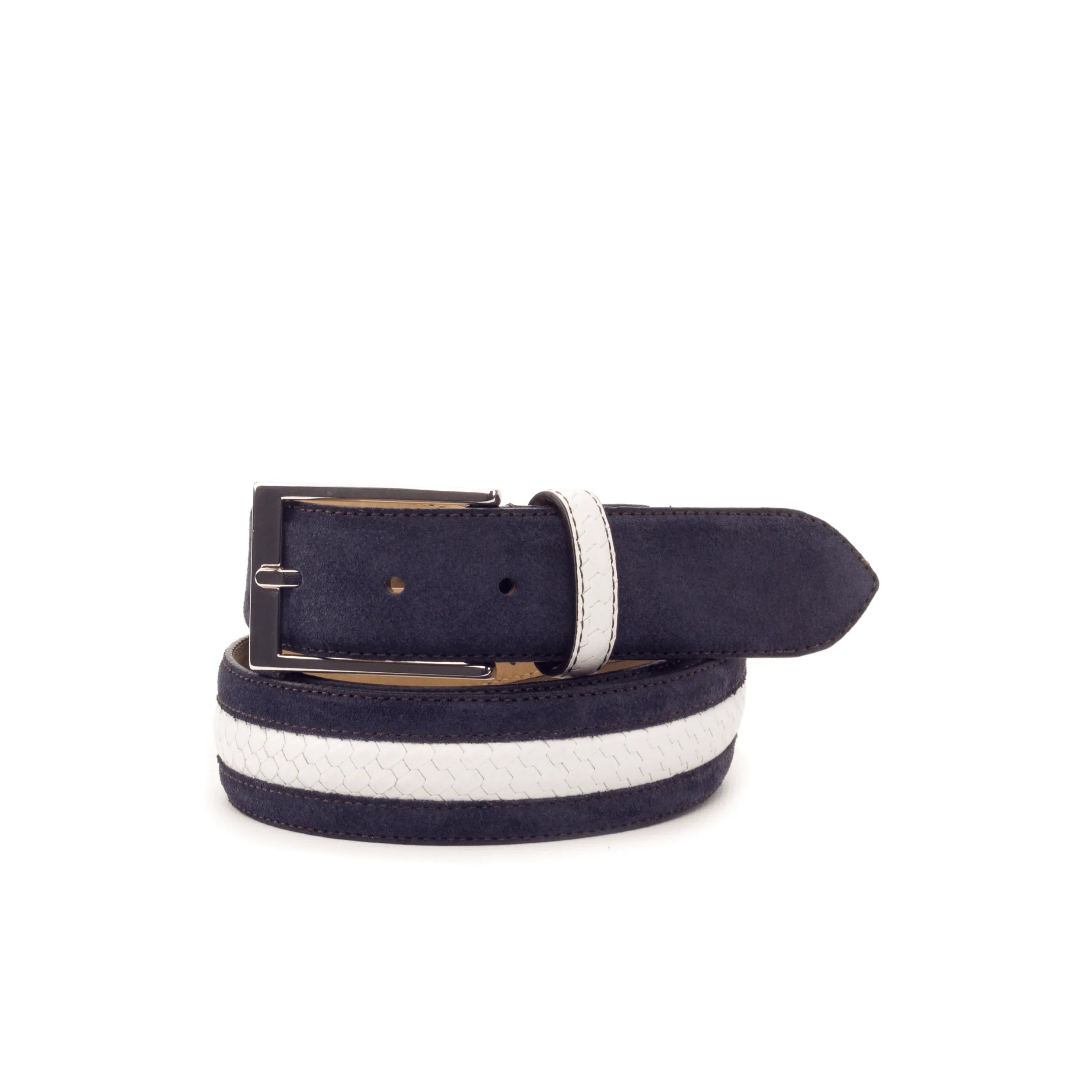
The Belt Broke Free: How Menswear's Most Overlooked Accessory Learned to Show Off

There is a hierarchy of attention in a man's wardrobe, and the belt sits somewhere near the bottom of it. Ask a well-dressed man about his shoes and he'll narrate a small autobiography. Ask about his watch and you may lose an afternoon. Ask about his belt and, more often than not, you'll get a shrug and a vague gesture toward a black strip of leather he's owned since a job interview in his twenties. The belt is the thing bought last, replaced never, and noticed only when it fails.
Which is strange, because the belt occupies the most photographed real estate on the body. It sits at the exact meridian where jacket meets trouser, where the eye naturally rests, where a look is either resolved or quietly unravels. For an object that spends its life at the center of the frame, it has enjoyed a remarkable career of being ignored. That is finally beginning to change.
A Short History of a Long Strip of Leather
The belt is, historically, a latecomer to tailoring. For most of the nineteenth and early twentieth centuries, trousers were held up by braces—suspenders, in American parlance—and the waistband sat high, well above the natural waist. Belts were military kit, workwear, the mark of a man doing something physical. Gentlemen didn't need them because their trousers were cut to stay put and their waistcoats hid the join.
Two things changed that. The first was the collapse of the waistcoat as an everyday garment after the First World War, which suddenly exposed the waistband to public view. The second was the drop of the trouser line through the 1920s and '30s toward the natural waist, where a belt actually made sense. By the time sportswear and the lounge suit had loosened menswear's formality, the belt had quietly won. Braces retreated to the wardrobes of tailors, bankers, and men who liked to talk about tailors and bankers.
But victory came with a demotion. Having become universal, the belt became invisible. The default was a plain black or brown strip, matched to the shoes with the grim efficiency of a man ticking a box. Generations of style advice reduced the belt to a rule—match it to your shoes—and rules, once obeyed, kill curiosity.

The Case Against the Plain Black Belt
Here is the heresy: the match-your-shoes rule is sound engineering and lazy style. It guarantees you won't look wrong. It also guarantees you won't look like anything at all. The rule was designed for a world of navy suits and black oxfords, where the belt's job was to disappear. But most men no longer dress that way. We dress in texture now—flannel, tweed, knit, washed cotton, suede—and against that landscape a flat expanse of shiny black leather can look less like discipline and more like a missed opportunity.
The Italians, predictably, worked this out first. Walk through Florence during Pitti Uomo and you'll notice that the peacocks—the tailors, the shop owners, the men who dress for a living—almost never wear a plain belt. They wear woven leather, suede, braided cord, and increasingly, patterned leather that echoes the cloth of a jacket rather than the polish of a shoe. The belt, in their hands, is not a fastener. It's punctuation.

Pattern Arrives at the Waist
The most interesting development in belts over the past few years has been the migration of tailoring patterns—houndstooth, glen check, tartan, herringbone—onto leather itself. This is harder than it sounds. Printing a pattern onto hide is easy and looks it. Achieving a check or a weave that reads as considered, with the depth and hand-finish of a proper accessory, requires the same crust-leather craft that goes into good shoes: dyeing, hand-painting, and finishing that lets the surface age rather than flake.
Que Shebley, better known for its made-to-order footwear, has quietly built out a range of these under its Venice line, and they're a useful illustration of the idea. Consider the houndstooth version—a pattern lifted straight from the tailor's swatch book and rendered in leather.

Worn with grey flannel trousers and a plain knit, a houndstooth belt does something a plain one can't: it introduces a familiar tailoring motif at the waist, tying the outfit together in a language the rest of the wardrobe already speaks. It's a wink, not a shout.
Tartan works on a bolder register. There's a reason the pattern has survived from the Highlands to the punk movement to the runways of every major house—it carries connotations of heritage and rebellion at once. On a belt, it reads as confidence without costume, particularly against solid colors that let the check do the talking.

How to Wear a Belt That Actually Says Something
The fear—reasonable enough—is that a patterned belt tips a man from dressed into decorated. It doesn't, provided you observe a few sane principles:
- Let it be the only voice. A patterned belt wants a quiet outfit around it. Solid trousers, a plain shirt or knit, and simple shoes give it room. Pair it with a loud jacket and a bold tie and you've started an argument.
- Match the mood, not the exact color. The old rule about matching shoes was about tone, not hue. A brown-based patterned belt lives happily with brown shoes even if the pattern strays; the eye reads the family resemblance.
- Respect the buckle. A subtle, well-made buckle keeps a patterned strap grown-up. Anything oversized or logo-heavy drags the whole thing toward novelty.
- Keep the width right. Roughly 30–35mm for tailoring, a touch wider for casual trousers. A dress-width strap in a bold pattern is the sweet spot for looking intentional rather than eccentric.
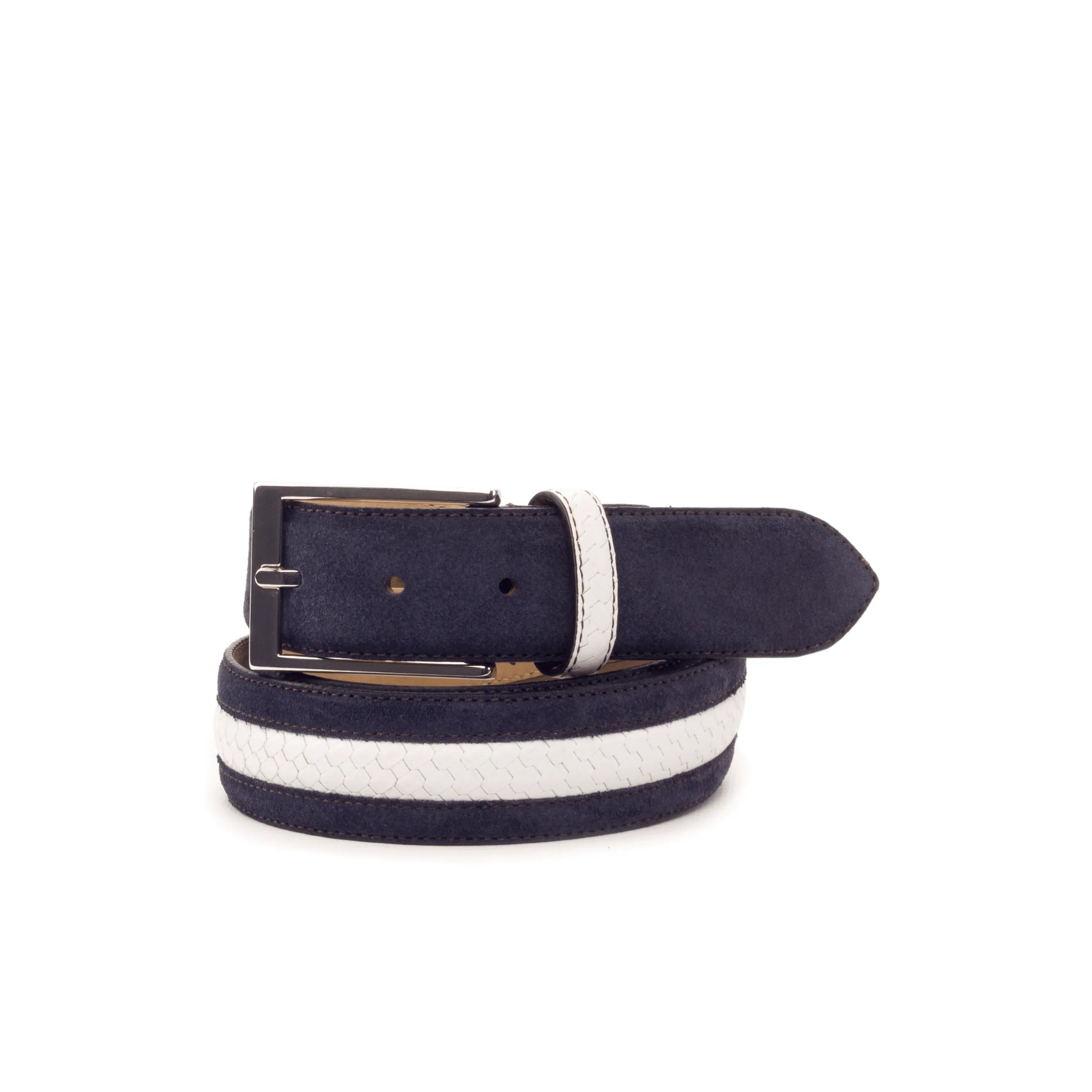
For the man not ready to commit to check, there's a middle path in the two-tone and striped register—less literal than tartan, but still a clear step away from the funeral-black default.

The Reward for Paying Attention
The pleasure of a good belt is not that anyone will compliment it—they probably won't, at least not directly. It's subtler than that. A considered belt is the kind of detail that registers as taste before it registers as anything specific: the sense that a man has thought all the way through, that the outfit doesn't stop at the shoes and start again at the collar with a blank void between.
Craft matters here more than most men realize. A cheap patterned belt looks cheap precisely because the pattern is the only idea; there's no depth to the leather, no hand-finishing, nothing to age gracefully. A properly made one, in crust leather that's been dyed and finished by hand, does what good shoes do—it acquires character, softening and deepening with wear until it looks like it could only be yours.
The belt spent a century pretending to be furniture. It turns out it was always the frame around the picture. Worth choosing as if it were.

اترك تعليقًا
This site is protected by hCaptcha and the hCaptcha Privacy Policy and Terms of Service apply.